Dr. Sarah Larsen ~ Medical Intuitive and Energy Healer

Medical Intuitive and Energy Healer for the Mind, Body, and Soul

  • About
  • Events
  • Welcome
  • Contact
  • Blog
  • Now

Search Results for: top

Agency Power vs Self Power

You have so many different types of power!

Agency Power is a power that comes from something bigger than yourself!

Self Power is power coming from sheer will of self.

Agency Power

Dr. Sarah taught a whole class to help you understand your personal power!

Healing is possible with your breath!
It is all here for replay

https://www.miraclemakersacademy.com/

Breathing Alternate Nostrils breathing called Nadi Shodhana!

You have so many forms of power living within you!

Using your Breathing power as one of your super powers!

How you breath and which part of you is breathing you is so important!
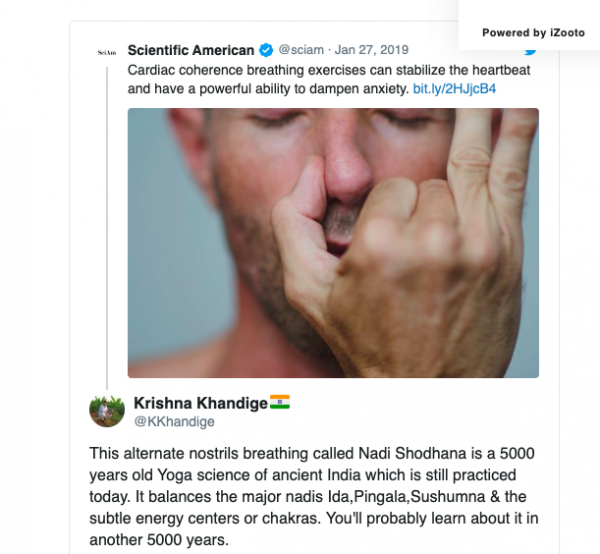
Close your left nostril with your thumb, inhale for five seconds from the right one and hold your breath. Now close your right nostril and slowly exhale from the left. … American magazine Scientific American, in its article titled ‘Proper Breathing Brings Better Health’ termed pranayama as ‘cardiac coherence breathing‘.Jan 30, 2019

Does Proper Breathing Brings Better Health?

Can changing how you breath reduce stress, insomnia, help your emotion control, improve your attention?


Yes certain breathing techniques can make life better.
As newborns, we enter the world by inhaling. In leaving, we exhale. (In fact, in many languages the word “exhale” is synonymous with “dying.”) Breathing is so central to life that it is no wonder humankind long ago noted its value not only to survival but to the functioning of the body and mind and began controlling it to improve well-being.

As early as the first millennium B.C., both the Tao religion of China and Hinduism placed importance on a “vital principle” that flows through the body, a kind of energy or internal breath, and viewed respiration as one of its manifestations. The Chinese call this energy qi, and Hindus call it prana (one of the key concepts of yoga).

A little later, in the West, the Greek term pneuma and the Hebrew term rûah referred both to the breath and to the divine presence. In Latin languages, spiritus is at the root of both “spirit” and “respiration.”

Pranayama: Extend Your Life by Extending Your Breath | Jim Kambeitz | TEDxBismarck

Recommendations for how to modulate breathing and influence health and mind appeared centuries ago as well. Pranayama (“breath retention”) yoga was the first doctrine to build a theory around respiratory control, holding that controlled breathing was a way to increase longevity.

In more modern times, German psychiatrist Johannes Heinrich Schultz developed “autogenic training” in the 1920s as a method of relaxation. The approach is based partly on slow and deep breathing and is probably still the best-known breathing technique for relaxation in the West today. The contemporary forms of mindfulness meditation also emphasize breathing-based exercises.

In fact, every relaxation, calming or meditation technique relies on breathing, which may be the lowest common denominator in all the approaches to calming the body and mind. Research into basic physiology and into the effects of applying breath-control methods lends credence to the value of monitoring and regulating our inhalations and exhalations.
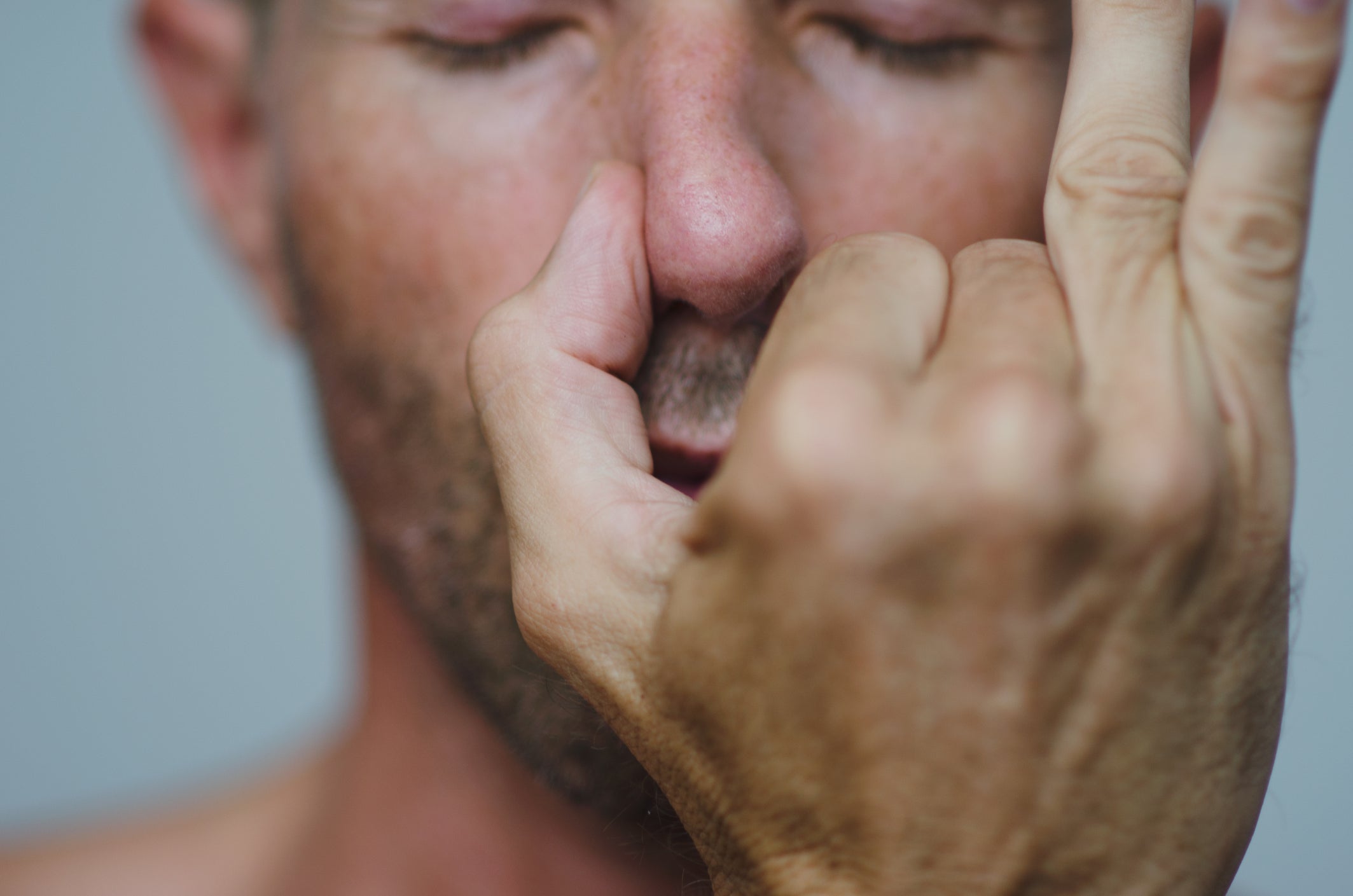
Yoga and meditation have inspired many of the breathing exercises used today. The benefits of controlled respiration were first theoretically posited centuries ago by the practitioners of pranayama yoga. Credit: Getty Images

MIND UNDER THE INFLUENCE

Even a rudimentary understanding of physiology helps to explain why controlled breathing can induce relaxation. Everyone knows that emotions affect the body. When you are happy, for instance, the corners of your mouth turn up automatically, and the edges of your eyes crinkle in a characteristic expression. Similarly, when you are feeling calm and safe, at rest, or engaged in a pleasant social exchange, your breathing slows and deepens. You are under the influence of the parasympathetic nervous system, which produces a relaxing effect. Conversely, when you are feeling frightened, in pain, or tense and uncomfortable, your breathing speeds up and becomes shallower. The sympathetic nervous system, which is responsible for the body’s various reactions to stress, is now activated. Less well known is that the effects also occur in the opposite direction: the state of the body affects emotions. Studies show that when your face smiles, your brain reacts in kind—you experience more pleasant emotions. Breathing, in particular, has a special power over the mind.

This power is evident in patients who have breathing difficulties. When these difficulties are sporadic and acute, they can trigger panic attacks; when they are chronic, they often induce a more muted anxiety. It is estimated that more than 60 percent of people with chronic obstructive pulmonary disease (COPD) have anxiety or depressive disorders. These disorders probably stem in part from concerns about the consequences of the disease (what could be more distressing than struggling to breathe?), but purely mechanical factors may contribute as well: the difficulty these patients experience often leads to faster breathing, which does not necessarily improve the quality of their oxygen supply but can aggravate their physical discomfort and anxiety.

Rapid breathing can contribute to and exacerbates panic attacks through a vicious circle: fear triggers faster breathing, which increases fear. In 2005 Georg Alpers, now at the University of Mannheim in Germany, and his colleagues observed significant and unconscious hyperventilation when people who had a driving phobia took their vehicles on the highway (where they might not be able to pull over if they become agitated).

Whether anxiety derives from breathing problems or other causes, it can be eased by a number of breathing techniques derived from traditional Eastern approaches (see “Six Techniques for Relieving Stress”). For example, “follow your breath,” an exercise that focuses attention on breathing, is one of the first steps in mindfulness meditation, whereas alternate nostril breathing comes from yoga. Combining reassuring thoughts with breathing is an approach incorporated into sophrology, a technique that emphasizes harmony of body and mind and that borrows exercises from many approaches, including yoga and mindfulness.

Overall, research shows that these techniques reduce anxiety, although the anxiety does not disappear completely. Breathing better is a tool, not a panacea. Some methods have been validated by clinical studies; others have not. But all of those I describe in this article apply principles that have been proved effective. They aim to slow, deepen or facilitate breathing, and they use breathing as a focal point or a metronome to distract attention from negative thoughts.

newsletter promo

SPOTLIGHT ON CARDIAC COHERENCE

A close look at one popular technique—cardiac coherence—offers more detail about the ways that breathing exercises promote relaxation. With the help of biofeedback, the approach attempts to coordinate breathing with heart rate, slowing and steadying breathing to slow and stabilize the heartbeat.

The method was developed based on the understanding that slow, deep breathing increases the activity of the vagus nerve, a part of parasympathetic nervous system; the vagus nerve controls and also measures the activity of many internal organs. When the vagus nerve is stimulated, calmness pervades the body: the heart rate slows and becomes regular; blood pressure decreases; muscles relax. When the vagus nerve informs the brain of these changes, it, too, relaxes, increasing feelings of peacefulness. Thus, the technique works through both neurobiological and psychological mechanisms.

Cardiac coherence’s stabilization of the heartbeat can dampen anxiety powerfully. Conversely, patients with overactive heartbeats are sometimes misdiagnosed as victims of panic attacks because their racing heartbeat affects their mind.

A typical cardiac coherence exercise involves inhaling for five seconds, then exhaling for the same amount of time (for a 10-second respiratory cycle). Biofeedback devices make it possible to observe on a screen how this deep, regular breathing slows and stabilizes the beats. (The space between two heartbeats on the display is never exactly the same, but it becomes increasingly more consistent with this technique.) Several studies have confirmed the anxiety-diminishing effect of these devices, although the equipment probably has more influence on the motivation to do the exercises (“It makes it seem serious, real”) than on the physiological mechanisms themselves. Simply applying slow breathing with the same conviction and rigor could well give the same result.

Some versions of cardiac coherence recommend spending more time on exhaling than on inhaling (for example, six and four seconds). Indeed, your heart rate increases slightly when you inhale and decreases when you exhale: drawing out the second phase probably exerts a quieting effect on the heart and, by extension, on the brain. This possibility remains to be confirmed by clinical studies, however.

Other work suggests that the emotional impact of the breathing done in cardiac coherence and various other kinds of exercises stems not only from effects on the periphery—on the parasympathetic nervous system—but also from effects on the central nervous system. Breathing may well act directly on the brain itself.

In 2017, for instance, Mark Krasnow of Stanford University and his colleagues showed in mice that a group of neurons that regulates respiratory rhythms (the pre-Bötzinger complex in the brain stem) controls some of the activity of the locus coeruleus, a region involved in attention, wakefulness and anxiety. Breathing techniques may influence this seat of emotions by modulating the activity of the pre-Bötzinger complex.

Beyond any direct effects produced by slowed breathing, the attention given to inhaling and exhaling may play a role in the brain’s response. In 2016 Anselm Doll and his colleagues, all then at the Technical University of Munich, showed that this attentional focus eases stress and negative emotions, in particular by activating the dorsomedial prefrontal cortex, a regulatory area of the brain, and by reducing activity in the amygdala, which is involved in these emotions.

In addition, paying attention to breathing causes most people to slow it down and to deepen it, which as I have mentioned, is soothing. Cognitive resources are limited, and so when individuals concentrate on breathing, they are not thinking about their worries. Those who practice mindfulness learn to notice when their attention drifts away from breathing and goes back to their concerns, and they train themselves to return periodically to their breathing. This refocusing has a relaxing effect on anyone and helps to combat ruminative thinking in people who have anxiety or depression, especially those who are particularly prone to negative thoughts that run in a loop.

WHEN TO USE BREATHING TECHNIQUES

What is the best time to apply slow-breathing techniques? One is during occasional episodes of stress—for example, before taking an exam, competing in a sporting event or even attending a routine meeting at work. In 2017 Ashwin Kamath of Manipal University in India and his colleagues studied stage fright before a public speaking engagement. The participants, all medical students, spent 15 minutes doing alternate nostril breathing—that is, slowly inhaling through one nostril and exhaling through the other by applying finger pressure to the side of the nose not being used. Compared with members of the control group, participants experienced somewhat less stress when speaking publicly.

These exercises may also help when insomnia strikes. In 2012 Suzanne M. Bertisch of Harvard Medical School and her colleagues reported, based on survey data, that more than 20 percent of American insomniacs do these breathing exercises to sleep better. They may be on to something. In 2015 Cheryl Yang and her team at National Yang-Ming University in Taiwan showed that 20 minutes of slow breathing exercises (six respiration cycles per minute) before going to bed significantly improves sleep. Insomniac participants went to sleep faster, woke up less frequently in the night and went back to sleep faster when they did wake up. On average, it took them only 10 minutes to fall asleep, almost three times faster than normal. The investigators attributed the results both to the calming mediated by the parasympathetic system and to the relaxing effect of focused breathing.

But respiratory techniques do not work only for acute stresses or sleep problems; they can also relieve chronic anxiety. They are particularly effective in people with psychiatric disorders such as phobias, depression and post-traumatic stress disorder. In 2015 Stefania Doria and her colleagues at Fatebenefratelli e Oftalmico Hospital in Milan, Italy, offered 10 training sessions of two hours each, spread out over two weeks, to 69 patients with anxiety or depressive disorders. The training included a varied set of breathing techniques (such as abdominal breathing, acceleration and deceleration of rhythm, and alternate nostril breathing.), combined with some yoga stretches. The researchers observed a significant decrease in symptoms at the end of the protocol. Even better, improvement was maintained two and six months later, with follow-up sessions just once a week and some home practice during this period.

Breathing exercises also help to counter the accumulation of minor physical tension associated with stress. Therapists recommend doing them regularly during the day, during breaks or at moments of transition between two activities: you simply stop to adjust your posture and allow yourself a few minutes of quiet breathing. Therapists often suggest the “365 method”: at least three times a day, breathe at a rhythm of six cycles per minute (five seconds inhaling, five seconds exhaling) for five minutes. And do it every day, 365 days a year. Some studies even suggest that, in addition to providing immediate relief, regular breathing exercises can make people less vulnerable to stress, by permanently modifying brain circuits. In a practice that may seem counterintuitive, however, counselors may encourage some anxious patients to breathe rapidly instead of slowly, as part of an effort to train them to cope with their anxieties (see box “Inhale for Panic!”).

But why confine breathing techniques to negative emotions? It is also worth applying them during pleasurable moments, to take the time to appreciate and remember them. In short, one can pause and breathe for enjoyment as well as to calm down.

365 : The name given to a common technique recommended by therapists to counter accumulated stress: at least three times a day, breathe six times per minute (inhaling for five seconds and exhaling for five seconds each time) for five minutes. Repeat all 365 days of the year.

Tradition and experience encourage the use of respiratory-control techniques, and scientific studies increasingly suggest that it is a good idea. Nevertheless, further research is still needed, particularly given that some studies lack control groups. One exception stands out: focusing on breathing often is not a good idea for people having a panic attack that stems from anxiety over their physical state (also known as interoceptive anxiety). In this case, focusing on physiology, such as muscle tension or breathing, may actually amplify panic (“Now that I’m paying attention to it, my breathing doesn’t seem regular. Am I choking? What will happen if I suddenly stop breathing?”) For these people, breathing techniques should be tested and practiced under the supervision of a therapist.

Otherwise, considering how often everyone experiences emotional discomfort in their everyday life and its negative consequences on health, we would all do well to regularly pay attention to the way we breathe. Start with brief periods of conscious, quiet breathing several times a day. Breathing is like solar energy for powering relaxation: it’s a way to regulate emotions that is free, always accessible, inexhaustible and easy to use.

In fact, I am mystified that controlled breathing is not recommended and practiced more widely. Perhaps it is perceived as too simple, commonplace and obvious to be a remedy. Faced with the complexity of negotiating the ups and downs of human life, many people may assume that simple solutions cannot be effective.

Or maybe we are intimidated by the sacred aspect of breathing, by its connection to life and, especially, to death. In the 1869 novel The Man Who Laughs, Victor Hugo wrote: “Generations are puffs of breath, that pass away. Man respires, aspires, and expires.” Ultimately, we don’t like to think that we are nothing more than “puffs of breath.”

Six Techniques for Relieving Stress

Here are some commonly used breathing techniques. Five to 10 minutes of exercise can relieve sporadic stress and even fend off panic attacks. More regular practice can lower the daily levels of anxiety.

Stand Up Straight

Posture is important for breathing: hold yourself straight, without stiffness, shoulders back, sitting or standing. This body posture facilitates the free play of the respiratory muscles (of the diaphragm and between the ribs). Good posture enables your body to breathe properly on its own.

Follow Your Breath*

Simply observe your respiratory movements: be aware of each inhalation and exhalation. Focus on the sensations you feel as air passes through your nose and throat or on the movements of your chest and belly. When you feel your thoughts drift (which is natural), redirect your attention to your breath.

Abdominal Breathing

Breathe “through your stomach” as much as possible: start by inflating your belly by inhaling, as if to fill it with air, then swell your chest; as you exhale, first “empty” your stomach, then your chest. This type of breathing is easier to observe and test while lying down, with one hand on your stomach.

Rhythmic Breathing

Near the end of each inhalation, pause briefly while mentally counting “1, 2, 3” and holding the air before exhaling. This counting while not breathing can also be done after exhaling or between each inhalation or exhalation. It is often recommended for anxious patients to calm anxiety attacks because it induces a beneficial slowing of the breathing rate.

Alternate Nostrils*

Breathe in and out slowly through one nostril, holding the other one closed using your finger; then reverse and continue by alternating regularly. There are many variations of this exercise—for example, inhaling through one nostril and exhaling through the other. Research suggests that what is most important, aside from slowing the breathing rhythm, is breathing through the nose, which is somewhat more soothing than breathing through your mouth.

Think Reassuring Thoughts While Breathing

With each breath, think soothing thoughts (“I am inhaling calm”). With each exhalation, imagine that you are expelling your fears and worries (“I am exhaling stress”).

*Technique validated by clinical studies.

Inhale for Panic!

Whereas slow breathing soothes, overly rapid breathing can induce feelings of stress and anxiety. This phenomenon is used in behavioral therapy sessions to train anxious patients to confront their emotions directly. By deliberately hyperventilating, patients artificially trigger an unpleasant anxiety, which they get accustomed to feeling and learn to put in perspective. This technique also enables them to see that poor breathing habits amplify their fear. Rights & Permissions

MORE TO EXPLORE

Efficacy of Paced Breathing for Insomnia: Enhances Vagal Activity and Improves Sleep Quality. H. J. Tsai et al. in Psychophysiology, Vol. 52, No. 3; pages 388–396; March 2015.
Self-Regulation of Breathing as a Primary Treatment for Anxiety. Ravinder Jerath et al. in Applied Psychophysiology and Biofeedback, Vol. 40, No. 2, pages 107–115; June 2015.
Mindful Attention to Breath Regulates Emotions via Increased Amygdala-Prefrontal Cortex Connectivity. Anselm Doll in NeuroImage, Vol. 134, pages 305–313; July 1, 2016.

ABOUT THE AUTHOR(S)

Christophe André

Christophe André is a psychiatrist at the Sainte-Anne Hospital Center in Paris and a pioneer in the therapeutic use of meditation in France. He has contributed significantly to the practice’s dissemination, especially through his writings, which include the international best seller Mindfulness: 25 Ways to Live in the Moment through Art (Rider, 2014).
Recent Articles

  • Once Again, No Female Nobel Winners in Science

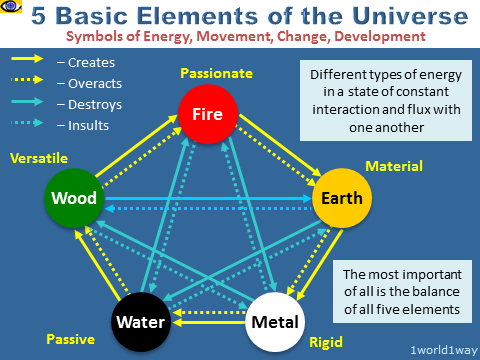
YOUR INSTincts and THE ELEMENTS

-THE SPIRIT SCIENCE ALCHEMY 

Instincts are inborn complex patterns of behavior that exist in most members of the species and should be distinguished from reflexes, which are simple responses of an organism to a specific stimulus, such as the contraction of the pupil in response to bright light or the spasmodic movement of the lower leg when the hammer taps it!

Dr. Bruce Lipton talks about the Nocebo Effect! The Nocebo effect truly shows you when your instincts are overridden by your mind!

Bruce Lipton explains what he calls the “shocking truth about the pharmaceutical industry:” the science called epigenetics. … That’s the result of positive thinking,” and not of drugs. The flip side to the placebo effect is negative thinking or the nocebo effect.

The concept of people being able to heal themselves without drugs defies the mission of big pharmaceutical companies, driven by profit margins and ever-larger sales figures.

And according to Dr. Lipton, “A minimum of one-third of all medical intervention is a placebo effect. That’s the result of positive thinking,” and not of drugs. The flip side to the placebo effect is negative thinking or the nocebo effect. “It’s equally powerful in regard to affecting your biology as is positive thinking, but it works in the opposite direction.”

Dr. Lipton explains that there is great resistance from the pharmaceutical company against this idea. Epigenetics requires a healing of the consciousness – and that is something the drug companies cannot sell for any price. The influence of the pharmaceutical companies is enormous, and so their refusal to accept epigenetics is the main reason many people have not heard of it, implies Dr. Lipton.

In fact, drug companies even determine the curriculum in medical schools.

Dr. Lipton goes on to explain that medications may not even be as helpful as we are led to believe: “drugs like Prozac, in a laboratory test, are no better than a sugar pill,” and “statin drugs help less than 3% of the people that take them; and, in fact, they cause side effects that are dangerous in about 23%.” On top of that, pharmaceuticals kill about 300,000 people a year. The question, then, is whether you need to take a medication in order to reap its intended benefit. The answer, according to Dr. Lipton, is no. “You have to change your consciousness because you already manufacture every equivalent of a drug right now.”

How to overcome The NOCEBO EFFECT and use your instincts to heal, feel, and thrive!

THE SPIRIT SCIENCE ALCHEMY – YOUR INSTINCTS and THE ELEMENTS

in·stinct noun plural noun: instincts /?instiNG(k)t/

an innate, typically fixed pattern of behavior in animals in response to certain stimuli. “birds have an instinct to build nests”o a natural or intuitive way of acting or thinking. “they retain their old authoritarian instincts” Similar: natural tendency inborn tendency inherent tendency inclination inner prompting urge drive compulsion need intuition natural feeling sixth sense second sight insight knows a natural propensity or skill of a specified kind. “his instinct for making the most of his chances” Similar: talent gift ability capacity facility faculty aptitudeBEYOND Your Gut instinct, your intuition, is your INSTINCTS and THE ELEMENTS!

The noun instruction is related to the word structure; both share the Latin root structus, “built.” The use of the word as we know it today appeared in the early 15th century from the Old French. Today it refers to the action of teaching and the job of a teacher. It can also be used to denote the directions themselves.

instinct (n.) early 15c., “a prompting” (a sense now obsolete), from Old French instinct (14c.) or directly from Latin instinctus “instigation, impulse, inspiration,” noun use of past participle of instinguere “to incite, impel,” from in- “into, in, on, upon” (from PIE root *en “in”) + stinguere “prick, goad,” from PIE *steig- “to p

Meaning “animal faculty of intuitive perception” is from mid-15c., from notion of “natural prompting.” General sense of “natural tendency” is first recorded 1560s. Instinct is said to be blind–that is, either the end is not consciously recognized by the animal, or the connection of the means with the end is not understood. Instinct is also, in general, somewhat deficient in instant adaptability to extraordinary circumstances. [Century Dictionary]

Because your instinct can be blinded and often is in childhood, you must learn about you and your body.

Your body is your instrument.
instrument (n.)

Your body is your instrument.
Its Instinct is to self heal!

directly from Latin instrumentum “a tool, an implement; means, furtherance; apparatus, furniture; ornament, dress, embellishment; a commission, authorization; a document,” from instruere “arrange, prepare, set in order; inform, teach,” literally “to build, erect,” from in- “on” (from PIE root *en “in”) + struere ”

late 13c., “musical instrument, mechanical apparatus for producing musical sounds,” from Old French instrument, enstrument “means, device; musical instrument” (14c., earlier estrument, 13c.) and directly from Latin instrumentum “a tool, an implement; means, furtherance; apparatus, furniture; ornament, dress, embellishment; a commission, authorization; a document,” from instruere “arrange, prepare, set in order; inform, teach,” literally “to build, erect,” from in- “on” (from PIE root *en “in”) + struere “to pile, build” (from PIE *streu-, extended form of root *stere- “to spread”).

The word in other Germanic languages also is from French. In English, the meaning “a means, an agency” is from mid-14c. The sense of “hand-tool, implement, utensil, something used to produce a mechanical effect” is from early 14c.

“Now usually distinguished from a tool, as being used for more delicate work or for artistic or scientific purposes” [OED]. The legal meaning “written document by which formal expression is given to a legal act” is from early 15c. Formerly also used body parts or organs with special functions.

You are an instrument of the Greater Mind -the Universe-when you understand the elements and how to be you!

If you cleanse the elements you’ll live a wonderful life. If you are beyond that, the best thing is to transcend, forget about living a beautiful life just transcend life because living a beautiful life is a more complex situation than transcending. Transcending means you’re beyond it. What’s beyond is not bothered by so many complexities of the physicality. But if you want to be in the physical and still above that then it takes little more mastery over the physical. If you have no mastery over the physical you will get enslaved to the physical. Right now how well organized the five elements are in your system decides how firm and stable and organically strong this body is. It’s just – the body is a play of five elements, so is the world, so is the universe. Everything is a play of five elements.

https://www.miraclemakersacademy.com/pages/get-started

Get Started

This class was taught live on zoom!

Miracle Makers Masterclasses are at no cost- Free! With Readings, Consults, and Special Messages for you when you are with us live!

Then every class is archived in Miracle Makers Academy!

Join us for live classes On Zoom or your phone:

Do not miss this opportunity to interact with the Miracle Makers!

Where: Online Zoom meeting or your computer or phone. 

Sign up for the Guided Meditation and receive get the community newsletter with all of the details for the next Miracle Makers Masterclass.

https://www.miraclemakersacademy.com/

This Recording now available of this live class

https://www.miraclemakersacademy.com/pages/get-started

Welcome to Miracle Makers Academy and we are so excited that you are ready to “get started” on transforming your life situation and reinventing yourself for the next chapter of your journey!

Here is a quick snapshot of all the exciting stuff we have going on here at the academy!


MasterClasses

The best place to start is by joining the weekly live, online MasterClasses that deep dive into a juicy subject for the first hour and then in the second-hour listeners can ask for a psychic reading, medical intuitive reading, relationship coaching, or readings Dr. Sarah offers as a medium. 

The Masterclasses are offered via Zoom and you can join by computer or you can call in using your phone.

Wellness Wednesdays – 6 pm Pacific time every Wednesday

Relationship and Love – 12 pm Pacific time every Thursday

Alchemy and Spirituality – 5:30 pm Pacific time every Sunday

Sign up for the newsletter to receive the details to join each MasterClass and also receive a free mp3 “Loving What Is” guided meditation.

Sign up here and receive the details to join the live classes and receive a free mini-reading!

Even if you only join the second hour of the call for a mini-reading this is perfectly okay.  Above all else, we want you to heal, feel, thrive… our driving mission here at the academy.

Take a deep dive into your heart and get the clarity you need to shift your life in a new direction and open yourself to the miraculous!

“Before attending a MasterClass, I believed that I was broken. Crippled with multiple back surgeries, a tight heart from a failed marriage, lost thoughts running around in my brain, and a career in shambles, I thought that I was just powerless. But, something shifted in the way I saw the world as a result of this class. Instead of feeling like a victim, I had a fresh start. Instead of seeing loss, I started to see possibilities.

For example, what if my vulnerabilities connected me to others with unbridled empathy? But, it just wasn’t my thoughts that changed. Within days of this session, my life was actually changed. First, a new home. Then, new career interviews. And even further, new dating possibilities…

Could just one session really transform a life? Really? Yes. It did! And, it will for you too!” ~ Andrew

Recording now available of this live class

Miracle Makers Academy Membership

The Miracle Makers Academy will always be the sum of all the amazing Miracle Makers that become members and make their presence known, give back to the community on the MasterClasses, and share their transformation with family, friends, and their communities.

For $10 per month, you will be able to join a thriving community of miracle makers supporting each other to take a deep look into their hearts and search for a life that is meaningful, adventurous, and fulfilling!

Click here to explore all the amazing member benefits!

When you become a new member and join a MasterClass, raise your virtual hand in the second half of the class and when selected to receive your mini-reading let Dr. Sarah know so we can celebrate you and give you a group hug!


…………………..

Your heart, intentions, and the fire create space for your creativity and abundance to flow. 

When you do this together with The Miracle Makers- Wow – the power of sacred sounds (mantras/prayers) the results are amazing.

Next LEVEL FREQUENCY!

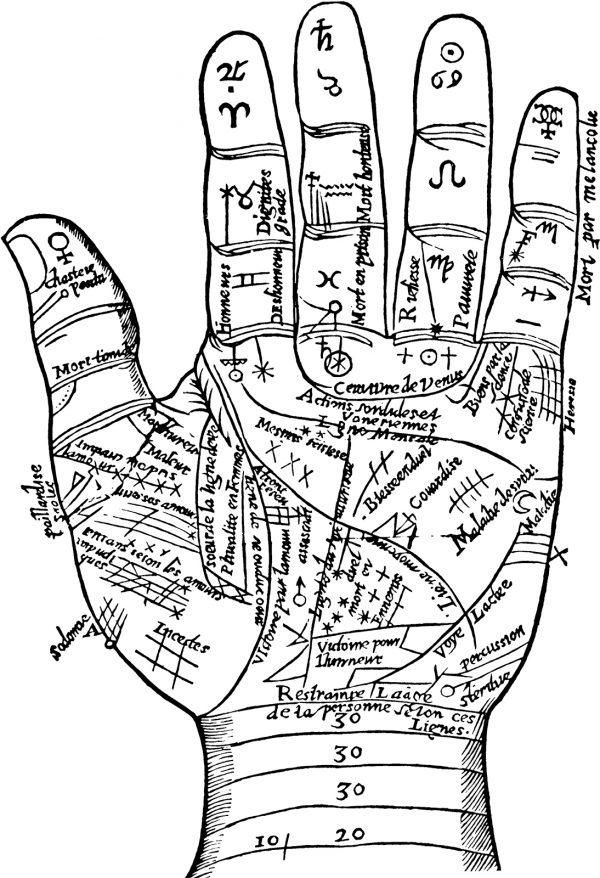
Everything you need to know about you since the time you became human is in the palms of your hand!

Your blueprint
Your biology
Your challenges
Your gifts
Read whole article here:
https://drsarahlarsen.com/palm-reading-learn-to-read-your-own-palm-lines/


LOVE YOU!
Dr. Sarah Larsen

Does What Happens to Earth ~ Happen to You?

EARTH’S MAGNETIC SONG RECORDED FOR THE FIRST TIME DURING A SOLAR STORM

by European Space Agency

Earth’s magnetic song recorded for the first time during a solar storm
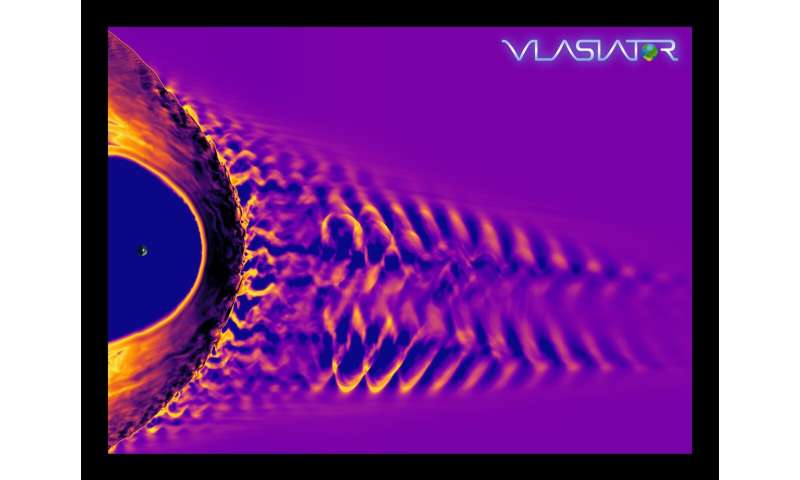
In this image, Earth is the dot to the left of the image and the large arc around it is our planet’s magnetic bow shock. The swirling pattern to the right is the foreshock region where the solar wind breaks into waves as it encounters reflected particles from the bow shock. The image was created using the Vlasiator model, a computer simulation developed at the University of Helsinki to study Earth’s magnetic interaction with the solar wind. Credit: Vlasiator team, University of Helsinki

Data from ESA’s Cluster mission has provided a recording of the eerie “song” that Earth sings when it is hit by a solar storm.

The song comes from waves that are generated in the Earth’s magnetic field by the collision of the storm. The storm itself is the eruption of electrically charged particles from the sun’s atmosphere.

A team led by Lucile Turc, a former ESA research fellow who is now based at the University of Helsinki, Finland, made the discovery after analyzing data from the Cluster Science Archive. The archive provides access to all data obtained during Cluster’s ongoing mission over almost two decades.

Cluster consists of four spacecraft that orbit Earth in formation, investigating our planet’s magnetic environment and its interaction with the solar wind—a constant flow of particles released by the sun into the Solar System.

As part of their orbits, the Cluster spacecraft repeatedly fly through the foreshock, which is the first region that particles encounter when a solar storm hits our planet. The team found that in the early part of the mission, from 2001 to 2005, the spacecraft flew through six such collisions, recording the waves that were generated.

The new analysis shows that, during the collision, the foreshock is driven to release magnetic waves that are much more complex than first thought.Play00:0000:13SettingsPIPEnter fullscreenPlayThe magnetic waves measured by ESA’s Cluster mission in the magnetic foreshock above Earth – the first region of our planet’s magnetic environment that solar wind particles encounter – during calm space weather conditions. The video contains a ‘sonification’ of the magnetic waves in the undisturbed foreshock, obtained by transforming the frequencies of these magnetic waves into audible signals. In the undisturbed foreshock, the sounds are very low pitch and monotonous. Credit: ESA/Cluster; L. Turc et al. (2019); Audio: Martin Archer, Queen Mary University of London, CC BY-SA 3.0 IGO

“Our study reveals that solar storms profoundly modify the foreshock region,” says Lucile.

When the frequencies of these magnetic waves are transformed into audible signals, they give rise to an uncanny song that might recall more the sound effects of a science fiction movie than a natural phenomenon.

In quiet times, when no solar storm is striking the Earth, the song is lower in pitch and less complex, with one single frequency dominating the oscillation. When a solar storm hits, the frequency of the wave is roughly doubled, with the precise frequency of the resulting waves being dependent on the strength of the magnetic field in the storm.

“It’s like the storm is changing the tuning of the foreshock,” explains Lucile.

And it doesn’t stop there because not only does the frequency of the wave change but it also becomes much more complicated than the single frequency present in quiet times. Once the storm hits the foreshock, the wave breaks into a complex network of different, higher frequencies.

Computer simulations of the foreshock, performed using a model called Vlasiator, which is being developed at the University of Helsinki, demonstrate the intricate wave pattern that appears during solar storms.Play00:0000:13SettingsPIPEnter fullscreenPlayThe magnetic waves measured by ESA’s Cluster mission in the magnetic foreshock above Earth – the first region of our planet’s magnetic environment that solar wind particles encounter – during a solar storm. The video contains a ‘sonification’ of the magnetic waves obtained by transforming the frequencies of these magnetic waves into audible signals. During the storm, the magnetic waves in the foreshock roughly double their frequency and become more complicated than during calm space weather conditions, resulting in audible sounds that are around an octave higher and much more variable. Credit: ESA/Cluster; L. Turc et al. (2019); Audio: Martin Archer, Queen Mary University of London, CC BY-SA 3.0 IGO

The changes in the foreshock have the power to affect the way the solar storm is propagated down to the Earth’s surface. Although it is still an open question exactly how this process works, it is clear that the energy generated by waves in the foreshock cannot escape back into space, as the waves are pushed towards Earth by the incoming solar storm.

Before they reach our atmosphere, however, the waves encounter another barrier, the bow shock, which is the magnetic region of space that slows down solar wind particles before they collide with Earth’s magnetic field. The collision of the magnetic waves modifies the behaviour of the bow shock, possibly changing the way it processes the energy of the incoming solar storm.

Behind the bow shock, the magnetic fields of Earth start to resonate at the frequency of the waves and this contributes to transmit the magnetic disturbance all the way to the ground. It is a fast process, taking around ten minutes from the wave being generated at the foreshock to its energy reaching the ground.

Lucile and colleagues are now working to understand exactly how these complex waves are generated.

“We always expected a change in frequency but not the level of complexity in the wave,” she adds.

Solar storms are a part of space weather. While the solar wind is always blowing, explosive releases of energy close to the sun’s surface generate turbulence and gusts that eventually give rise to solar storms.Play00:0000:15SettingsPIPEnter fullscreenPlayThis movie from the Vlasiator computer model shows the foreshock above Earth – the first region of our planet’s magnetic environment that solar wind particles encounter – being engulfed by a magnetic cloud during a solar storm. The waves generally become much smaller, and so higher in frequency, than those arising during calm space weather conditions, and they break up into a much more complicated pattern, which contains many different frequencies. Credit: Vlasiator team, University of Helsinki

Understanding space weather has become increasingly important to society because of the damaging effects solar storms can have on sensitive electronics and technology on ground and in space. It is now more important than ever that we understand how space weather disturbances such as solar storms propagate through the Solar System and down to Earth, and ESA’s upcoming Solar Orbiter mission, scheduled for launch in February 2020, will greatly contribute to these investigations.

This new scientific study based on the long-lived Cluster mission provides another detail in that knowledge but it also has a larger role to play in our understanding of the universe. Magnetic fields are ubiquitous and so the kind of complex interaction seen in Earth’s foreshock may take place in a variety of cosmic environments, including exoplanets orbiting close to their parent star, as they would be immersed in intense magnetic fields.

“This is an excellent example of how Cluster continues to extend our knowledge of the sun-Earth connection, even years after the original data was obtained,” says Philippe Escoubet, ESA Project Scientist for Cluster.

“The results take us deeper into the details of fundamental magnetic interactions that take place across the universe.”

Palm Reading | Learn to Read Your Own Palm Lines!

Should anyone read your palm?

No, yes and you should learn to read your own palm!

Everything you need to know about yourself is right there in the palm of your own hands!

Medical Intuitive Healer - Dr. Sarah Larsen
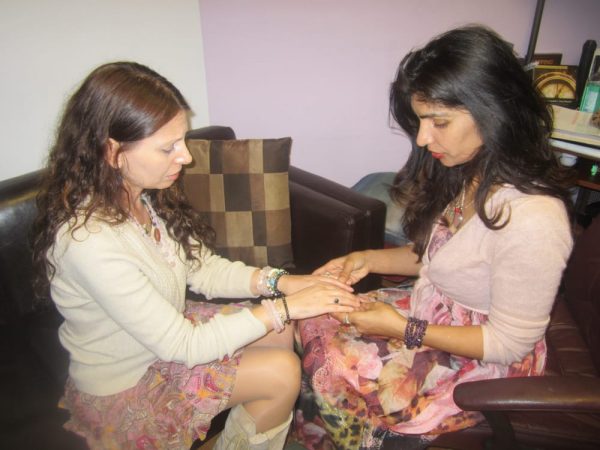
Actress and Humanitarian Daniele holding Dr. Sarah’s hands as they “Intend in… Pray in”!

Your fingerprints are unique patterns, made by friction ridges (raised) and furrows (recessed), which appear throughout your hand. We have thus studied them on the pads of the fingers and thumbs.

Yes, prints from both palms, toes and even your feet are also unique. All of these are used for identification.

Here in this guide we focuse on prints from the fingers and thumbs.

Whether you have great eye sight or you press your fingerprint pattern meaning inked finger is pressed onto paper, you have the friction ridges on that particular finger. Friction ridge patterns are grouped into three distinct types—loops, whorls, and arches—each with unique variations, depending on the shape and relationship of the ridges:

Loops – prints that recurve back on themselves to form a loop shape. Divided into radial loops (pointing toward the radius bone, or thumb) and ulnar loops (pointing toward the ulna bone, or pinky), loops account for approximately 60 percent of pattern types.

This image used for decorative purposes only.

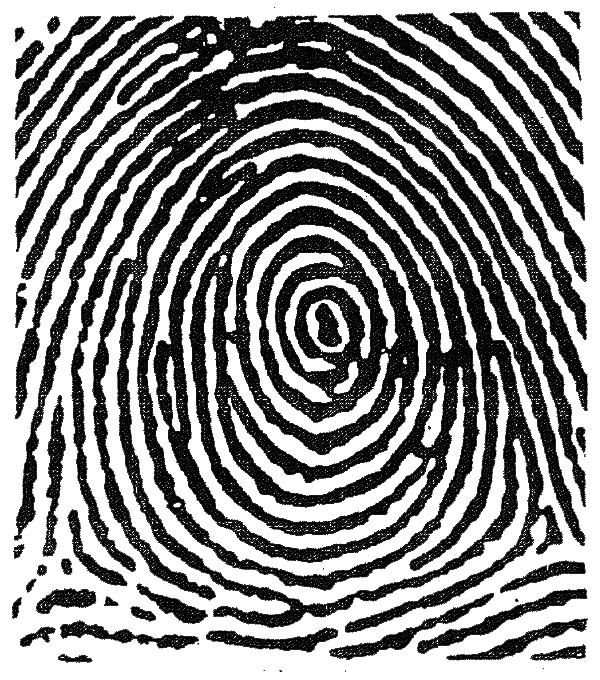
Whorls – form circular or spiral patterns, like tiny whirlpools. There are four groups of whorls: plain (concentric circles), central pocket loop (a loop with a whorl at the end), double loop (two loops that create an S-like pattern) and accidental loop (irregular shaped). Whorls make up about 35 percent of pattern types.

This image used for decorative purposes only.

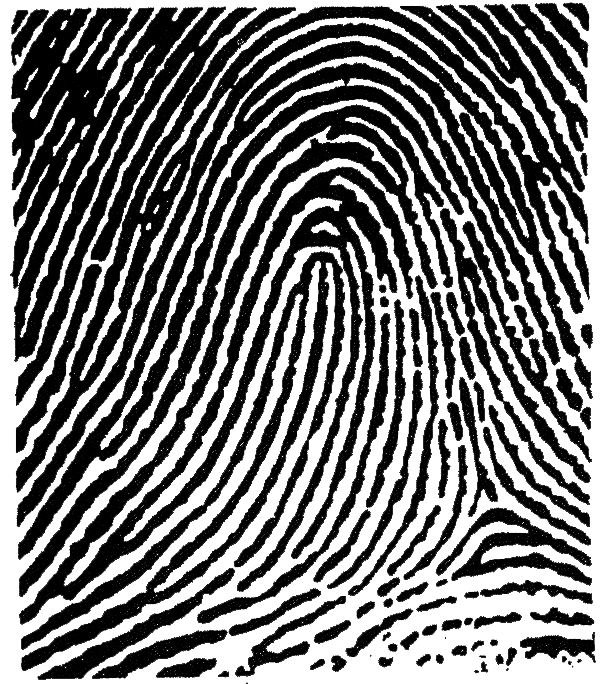
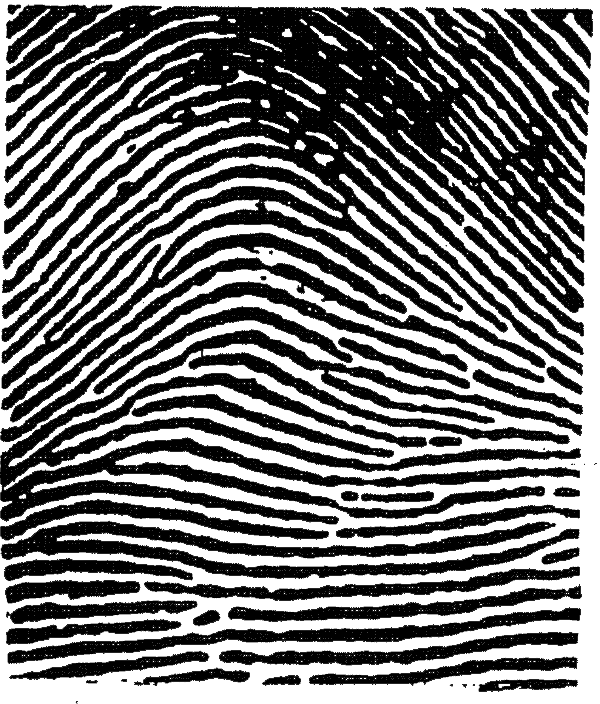
Arches – create a wave-like pattern and include plain arches and tented arches. Tented arches rise to a sharper point than plain arches. Arches make up about five percent of all pattern types.

This image used for decorative purposes only.

You have your Own -You are unique

The two underlying premises of fingerprint identification are uniqueness and persistence (permanence). To date, no two people have ever been found to have the same fingerprints—including identical twins. In addition, no single person has ever been found to have the same fingerprint on multiple fingers.

Persistence, also referred to as permanence, is the principle that a person’s fingerprints remain essentially unchanged throughout their lifetime. As new skin cells form, they remain cemented in the existing friction ridge and furrow pattern. In fact, many people have conducted research that confirms this persistency by recording the same fingerprints over decades and observing that the features remain the same. Even attempts to remove or damage one’s fingerprints will be thwarted when the new skin grows, unless the damage is extremely deep, in which case, the new arrangement caused by the damage will now persist and is also unique.

The Proof is in the Minutiae

Analysts use the general pattern type (loop, whorl or arch) to make initial comparisons and include or exclude a known fingerprint from further analysis. To match a print, the analyst uses the minutiae, or ridge characteristics, to identify specific points on a suspect fingerprint with the same information in a known fingerprint.
For example, an analyst comparing a crime scene print to a print on file would first gather known prints with the same general pattern type, then using a loupe, compare the prints side-by-side to identify specific information within the minutiae that match. If enough details correlate, the fingerprints are determined to be from the same person.


Are you ready to know what are your unique qualities? What gifts do you possess or what drives you? Do you want to know how to reach beyond known limits?

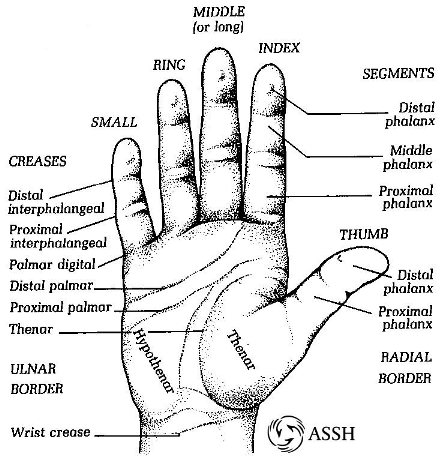
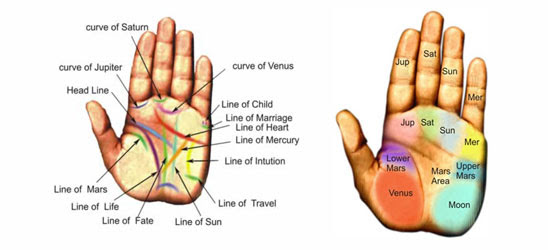
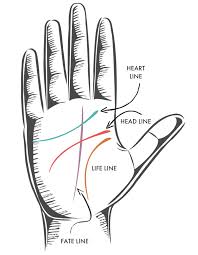
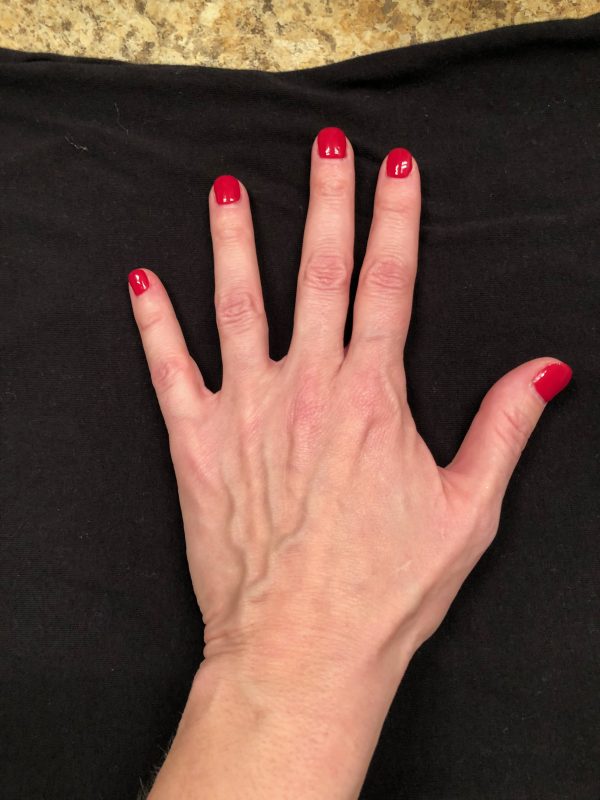
Labels we will use for reading your Palm!

This image has an empty alt attribute; its file name is hand-surface.jpg

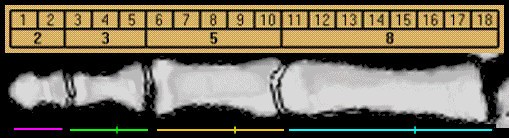
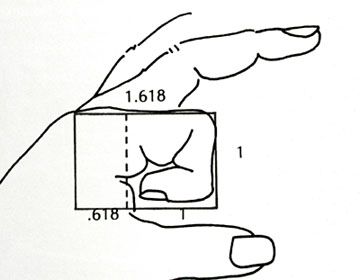
The hand shows Phi and the Fibonacci Series.

There are many examples of the Divine Proportion found throughout the design of the universe and everything in it, but let’s take a look at one of the most important things first: You!   We’ll need a few Golden Section / Fibonacci building blocks:


Your Age of Reason

OLYMPUS DIGITAL CAMERA

You probably didn’t know that you can transform every area of your life by understanding what occurred for you before your age of reason! In fact, you may have a program – a blueprint making decisions for you that began forming before you were born until your age of reason!

Around the age of seven, give or take a year, you as a child entered a developmental phase known as the age of reason.

“The age of reason refers to the developmental cognitive, emotional, and moral stage in which children become more capable of rational thought, have internalized a conscience, and have better capacity to control impulses (than in previous stages),” explains Dana Dorfman, PhD, psychotherapist, and co-host of the podcast 2 Moms on the Couch.

It’s the time when you as a child started to truly grasp the difference between right and wrong and began to realize that other people have their own feelings that might not match yours.

The way you think, love, and solve problems – your blueprint occurred in the Uterus of your Mother when you were becoming a baby. Amazing new scientific discoveries gather evidence that the Blueprinting of your subconscious mind was affected by your Mother’s beliefs.

Your hand recorded the belief patterns that are set. Your blueprint continued to be affected until the age of reason. Patterns in the subconscious mind-imprinting and programming are all happening to you right now, and these are the programs on which the future life will unfold!

There is evidence that your blueprint is written as you develop in your mother, in the palms of your hands, and acts in your everyday life!

Your lines tell you how to ignite you!

When you understand the blueprints and secrets to how you function best inside your palm, you will know exactly what you are here to do!

You’ll know how to do it quicker and easier than anything else you have ever done!

You formed so much of you before you were born.

At around 18 to 19 days after fertilization, your heart begins to form. This early development is critical for your subsequent embryonic and prenatal development.

Your heart is the first functional organ to develop and starts to beat and pump blood at around day 21 or 22.

Your hands record all of your development from the womb and your lines keep changing until the tomb!

Womb

At about 6 weeks when you were being formed in the uterus, your heartbeat can usually be detected by midwives and doctors. After the 8th week, you are called a fetus instead of an embryo. Your arms, hands, fingers, feet, and toes are fully formed.

What is the first thing to form in a fetus? Tiny buds that eventually grow into arms and legs are forming. Fingers, toes, and eyes are also forming in the second month of pregnancy.

The neural tube (brain, spinal cord, and other neural tissue of the central nervous system) is well-formed. The digestive tract and sensory organs begin to develop.

Your Human hands develop palmar creases in the womb. Incredible at around the 12th week of gestation.

You as a baby, inside your Mom at 12 weeks are opening and closing your fingers and curling toes. And your baby brain is developing fast!

You begin developing reflexes—if you poke your Mom’s 12-week pregnant belly while looking at you on an ultrasound, you more than likely moved.

Many lines are present on a baby’s hand when he or she is born.

Everything you need to know about you since the time you became human is in the palms of your hand!

Your blueprint
Your biology
Your challenges
Your gifts

Dr. Sarah Larsen is an incredible intuitive and healer! Los Angeles is full of services which include palm reading, psychics, healers, etc. However, Dr.Sarah Larsen is the real deal! She is amazingly compassionate and just being in her presence is calming and healing. She has helped me and a few of my friends with many life challenges, health issues, and personal problems. She is always there to guide you in the right direction and give you clear answers to your life questions, without overstepping boundaries which many intuitive can do. You’ll get a better sense of your life’s purpose and direction after a reading with Sarah. I can’t say enough good things about her! You have to see her to understand.” ~ Jeannette

This part of your hand ~ in the non-dominant hand ~ records your relationship and how you learned to use resources.

 Your Powers are Listed in the creases!

  1. An inspired or spiritual mission
  2. Mental genius/creativity
  3. Vocational success, achievement, and service
  4. Financial freedom and independence
  5. Family love and intimacy and continuance of procreation
  6. Social contribution, influence, and leadership
  7. Physical health, stamina, strength, and well-being

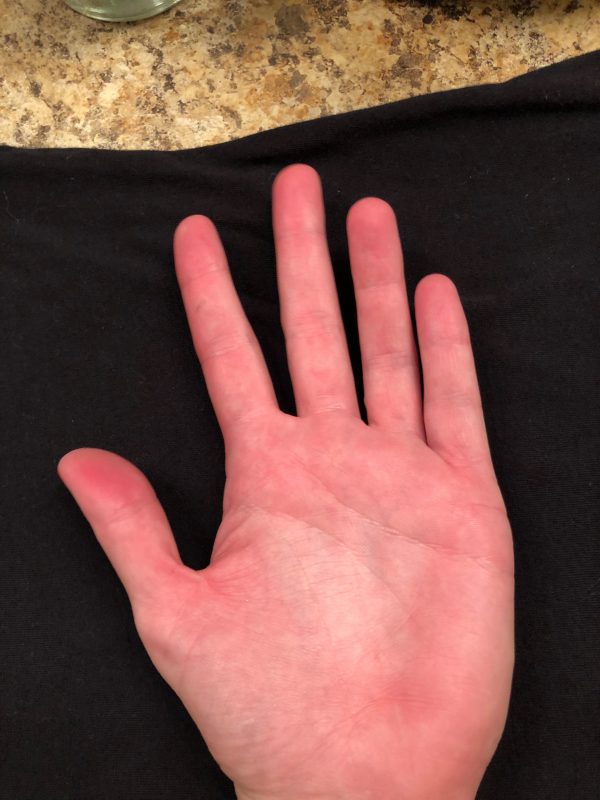
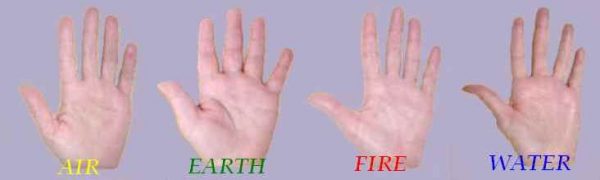
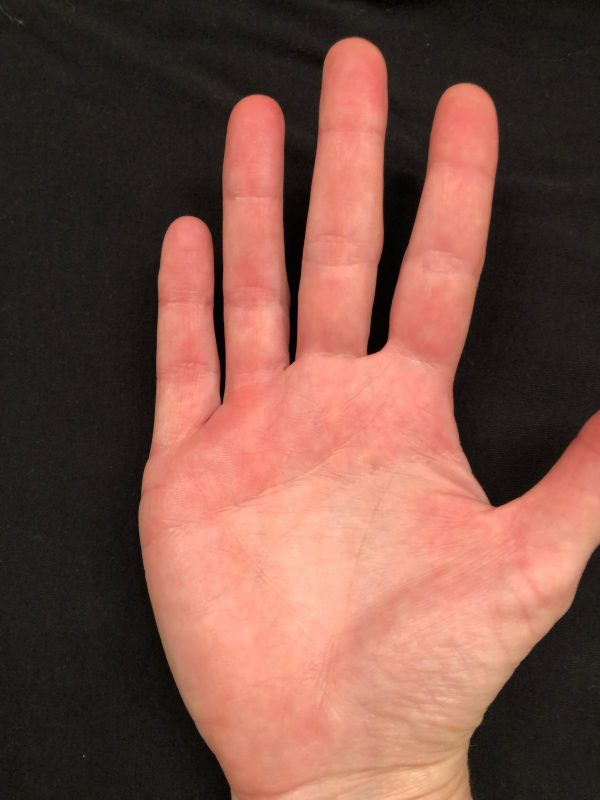
Water hands have oblong palms paired with long fingers, you have water hands.

This indicates an imaginative person who has a fluid, flexible personality.

People with this hand are also romantic and very sensitive, sometimes to a fault.


Air hands type people with this type of hand (square or rectangular palm with fingers equal in length to the palm) are often very smart and great communicators.

However, they can overthink simple things and sometimes have a hard time interacting with the world around them.


Fire hands generally have big palms and stubbier fingers. The shorter their fingers are, the more stubborn that person is.

People with fire hands are passionate, as the name would suggest, and also natural leaders.

It doesn’t take long for them to make up their minds, which is why teams often turn to them for direction.


Earth hands exhibit squarish palms and short fingers as well.

This type of hand indicates that a person is super-responsible and value security and stability over passion and excitement.

They’re most often calm and peaceful as well.


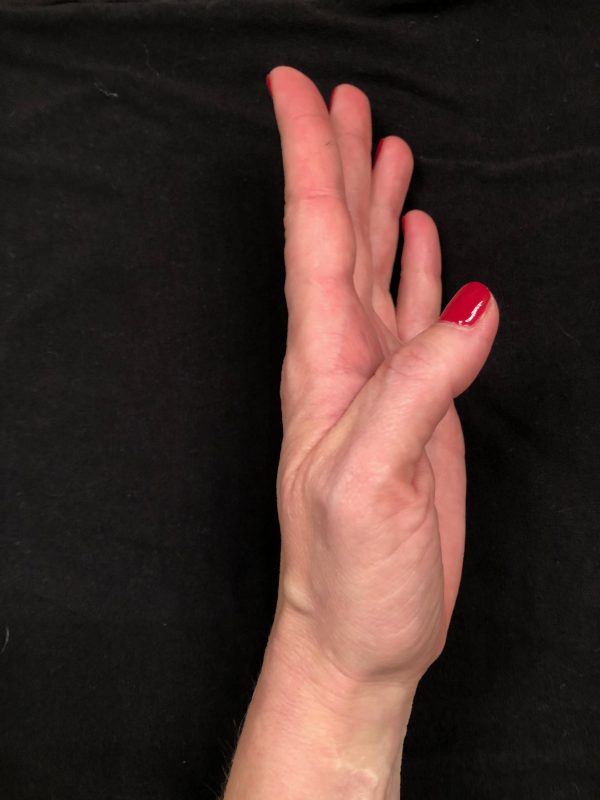
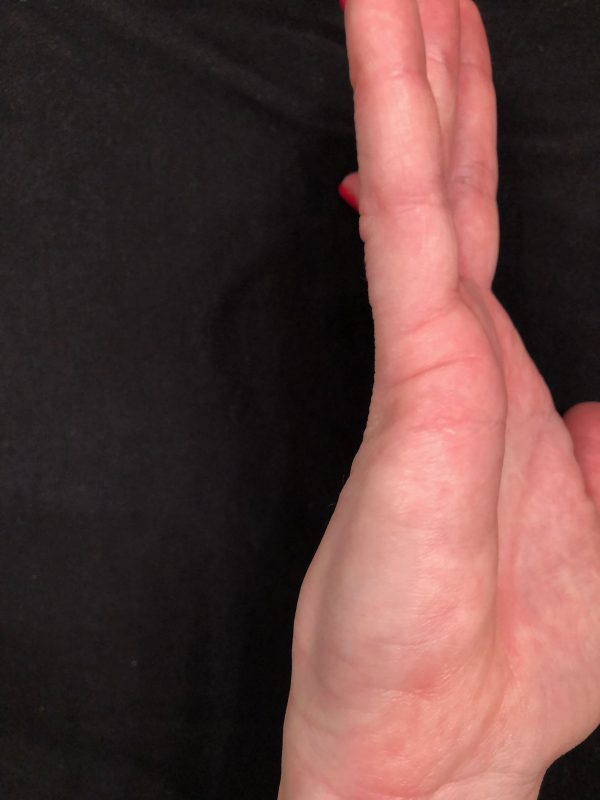
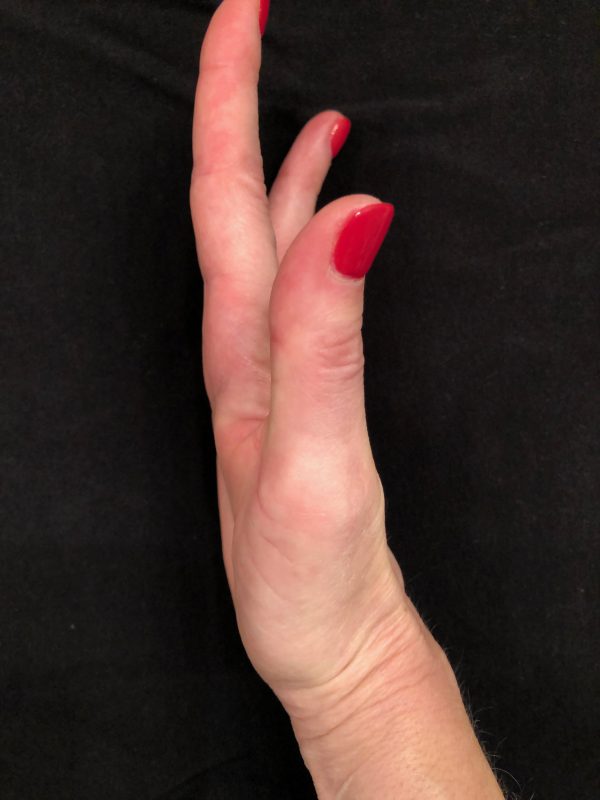
Your Opposable Thumb

Your thumb in a way represents your whole hand. There is a great deal of importance attached to your thumb. One is very obstinate if the fore part of the thumb is wide.

Jody Tishmack wrote: “Stereoscopic vision, depth perception, certain emotions and other perceptions, and the ability to stretch our thumbs farther than most other species, the ability to build and destroy things, and many other traits individually or in combination separate us from other species, not necessarily all species though. 

Other animals with opposable thumbs include gorillas, chimpanzees, orangutans, and other variants of apes; certain frogs, koalas, pandas, possums and opossums, and many birds have an opposable digit of some sort.  Many dinosaurs had opposable digits as well.  Granted, most of these are primates, as are we.  I wonder if rationalization is something unique to humans.  The ability to ponder may be as well.”

Collective unconscious refers to structures of the unconscious mind that are shared among beings of the same species. It is a term coined by Carl Jung. ….. Going beyond the individual mind, Jung believed that “the whole of mythology could be taken as a sort of projection of the collective”

This image has an empty alt attribute; its file name is HiO9CrbqvH9lGYIypvnfXcaMHiTt-xbqjUDZlna6NWcir01nHF176W_zg1qkU5wbShNQ449DLujuqxn-Q2DFNEzzjypTsmKg3oFJ6uvXjrxTOQ6-HEo=s0-d-e1-ft

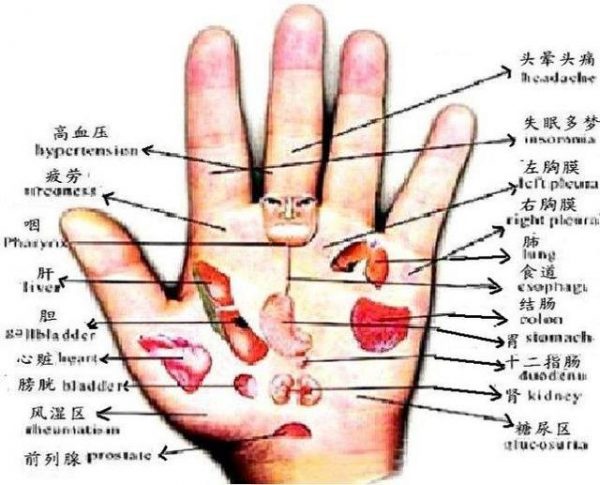
Palmistry is an integral part of understanding your whole body! It is established that our palm contains sensitive points to control our whole body. The science of acupressure is also based on the same fact only in which the concept goes to cure various body parts with the application of pressure on these points.

The lines are there in the hand of an infant even before he takes his first breath. According to medical science, the major lines appear in the hand of a child in his 3rd month in pregnancy. The minute lines (micro prints or fingerprints) get developed with the completion of 6 months.

The left part of our brain regulates our right hand whereas the left hand is controlled by the right part of the brain. Medical science proclaims that left part controls our speech, writing skills, and scientific calculation whereas right part controls our musical and artistic abilities.

You are an unusual animal by any stretch of the imagination. Your special abilities, from big brains to opposable thumbs, have allowed you to change your world dramatically and you can even leave the planet.

Secrets you can read to that make you so special are in your hand? Some things you take completely for granted might surprise you.

So what does make Homo sapiens unique? Perhaps it has something to do with our imagination, our ability to ponder “what if?” and our stubborn persistence.  Knowing yourself and your hand certainly helps when deciding a direction of action if we can picture a scenario in our head and imagine future outcomes, assuming our assumptions are correct.

With a palm reading, you can know if your assumptions are correct!

What is it that makes you keep trying even in the face of failure?  Why do you keep trying when you encounter problems?

What happens when we “believe” something different?  Is it really as simple as sometimes some people just won’t give up?  Is this what makes Homo sapiens different from other species of animals?

What makes you different from other humans is in your palms!

Tomb deferred: How to live longer in the palm of your hands

Lessons you will learn about your self will extend your life! This is why there are creases in your palm! So you will know yourself and extend your life!

First up: Speech -What works for you and what doesn’t

Your larynx, or voice box, sits lower in the throat in humans. Human ancestors evolved a descended larynx roughly 350,000 years ago. You also possess a descended hyoid bone — this horseshoe-shaped bone below the tongue, unique in that it is not attached to any other bones in the body, allows us to articulate words when speaking.

You will watch your sound change lines in your hand in real time!

Humans are the only species known to blush, a behavior Darwin called “the most peculiar and the most human of all expressions.” It remains uncertain why people blush, involuntarily revealing our innermost emotions (we do know how it works). The most common idea is that blushing helps keep people honest, benefiting the group as a whole.

How much does your belief impact human advances?  If you believe you can do something does that mean you are able to do something? 

You are a Genius

“A genius is someone who sees something no one else sees…and reaches it.” 

How many times have we read about geniuses who refused to accept limitations, who accomplished something no one else thought they could? 

What happened to you if you knew “How to read your Genius?

What happens in the mind of some humans when they refuse to accept limitations? The lines in their hands change! 

Are you ready to know what your unique qualities? What you possess? What drives you? Do you want to know how to reach beyond known limits?

Apply to have a private reading here: https://drsarahlarsen.com/apply-for-a-private-session-with-dr-sarah/

Albert Einstein once said “Everybody is a genius. But if you judge a fish by its ability to climb a tree, it will live its whole life believing that it is stupid”

Everything occurring in your body, mind, and spirit is leaving a mark for you in your hands! The scholars, healers, and visionaries in ancient India, China, and Egypt have known how to utilize this information!  

This image has an empty alt attribute; its file name is XhKXeSKbv0lhm2qz_gcB0vtkG2svCni-ZtuJD6UpcaemOPMAf-V8NrhZ4Wzdvb0qjevBcI2IcPxmXVWwTPVswrDvkop0nHDpZegN0iNw5iaS7Llm8U2J7WoR=s0-d-e1-ft

Somewhere, deep inside, you know what kind of person you were designed to be.

ipalmis0

Topics covered in this class include (click title to watch the video):

Life Line, Head Line, Heart / Love Line

Romance, Sexual Partners, and Emotional Attachments

Find Answers to Your Most Troubling Questions with a Palm Reading 

Could a palm reading be the key to unlocking your understanding of your marriage line, children line, money line, lifeline, or love line?

Are you searching for answers to your most troubling questions regarding your health, relationships, finances, or life purpose?

Are you struggling to connect with your own inner guidance and the wisdom of your body?

 Use the wisdom of palmistry as a tool to peer into your past,
present, and future – and offer intuitive guidance to answer your most pressing questions and concerns.

Palm reading can help you determine where you are experiencing both success and resistance in relation to your Life Purpose and Life Lessons right now.

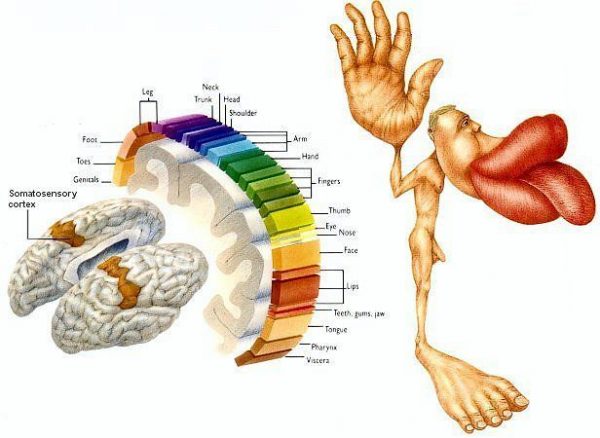
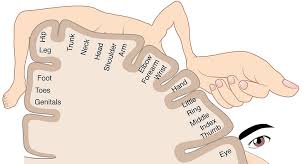
 Your brain pays wildly disproportionate attention to touch on different parts of your body

You also have a special system that makes pain hurt

The fact that your cognitive state — what you are thinking about and paying attention to — can modulate your perception of touch is both a blessing and a possibility!

“It’s a blessing because it means modulate negative touch through positive experiences, like meditation, exercise, and mindfulness training.

And it’s a possibility in that if you obsess over pain, you can get into a spiral where we make it worse: you attend to it more, and it feels more painful, and you attend to it more. It also means that if you want to maximize pain to torture, someone, you can manipulate their emotional state to make it feel worse. If they feel threatened, or are sleep deprived, or don’t know when the pain will arrive, it’s perceived as being worse.”

“This isn’t just true of pain, but of pleasant sensations too. Imagine you’re with your significant other, and he or she caresses your arm — it feels nice. Now imagine you’re in the middle of a heated argument, and you get that exact same caress. The very same nerves will be activated, but it will actually feel different to you — annoying, and unwelcome. That’s because the parts of the brain that are processing emotional touch are affected by the other parts of your brain as well.”

Dr. Sarah teaches a popular class on “How to Read Your Own Palm Lines.” Watch now to learn about your palm!

https://youtube.com/watch?v=videoseries%3Flist%3DPLrAYmAekbPd3SLdu5Fky-hRyXYRfbPy8c

Biophotons of Light

Biophotons are ultra-weak photon (light) emissions of biological cell systems. … Biophotons or particles of light, with no mass, transmit information within and between cells. The DNA in living cells stores and releases photons creating “biophotonic emissions” that may hold the key to illness and health. We are energy.

Biophotons are photons (light particles) that are generated within the body, and these could be measured as they emanate from the skin. Similarly, bioelectrons are available from within the body; these are measured in instruments such as electro-photonic imaging.

Biophotons as Subtle Energy Carriers

TM SrinivasanAuthor informationArticle notesCopyright and License informationDisclaimerGo to:

Introduction

Subtle energy research in Qi and prana is leading us into myriad labyrinths of scientific trails. Qi, the Chinese energy equivalent of Prana, is measured in acupuncture systems and its flow is directed for promoting health. We even know some of the channels through which Qi energy seems to flow. The channels are called Bonghan system, seen in some parts of the body.[1] Still, we are not sure what kind of physical energy flows through these ducts; is it electromagnetic or some particles that roll through these interlinking systems of channels? Although scientists have postulated laser-like electromagnetic radiations flowing through these links, it is still early to say if this is indeed the case in all acupuncture meridians.

In the tangible domain, two subtle energy carriers come to mind: biophotons and bioelectrons. Biophotons are photons (light particles) that are generated within the body, and these could be measured as they emanate from the skin. Similarly, bioelectrons are available from within the body; these are measured in instruments such as electro-photonic imaging. This aspect will be taken in a later presentation.Go to:

Biophotons

Bioluminescence is produced in living organisms such as fireflies and this should not be confused with biophotons. Bioluminescence is produced due to the presence of specific biochemicals in these organisms. The vivid colors emanating from these organisms are for attracting a prey or for species propagation. These biochemicals are not available in all organisms (for example, not in humans). Hence, bioluminescence is observed only in some species. Biophotons, however, are light particles that are generated within the body and are constantly radiated from the body surface. These spontaneous emissions are thought to be associated with generation of free radicals due to energy metabolic processes.[2,3] Since these dynamic metabolic processes are common to most living systems, it is likely all living beings give rise to biophotons. Further, these light emissions are extremely weak and hence cannot be observed by the naked eye. Detections of biophotons need special photon counters which are sensitive to pick up even a single photon in the environment.

In one experiment, photomultiplier tubes were used along with a charge-coupled camera.[3] Any stress to the skin in the form of exposure to ultraviolet radiation or cigarette smoke enhances the emission of biophotons while topical application of ascorbic acid or antioxidant solutions reduces such radiation. It is thought that studies of spontaneous ultraweak photon emission could be used for assessing aging in humans as well as for determining oxidative processes in humans.[3]

It is known further, that after practice of meditation, biophoton emissions from the body decrease; this could be due to reduced free radicals in meditating subjects.[4] Communication and control are two required activities within and between cells to maintain homeostasis. Normally, it is thought that both these functions are achieved through biochemical and neurological means. The coherent light source is now thought to be another arm through which both control and communication are achieved. This may be true especially in long-range communications in the body.[5]

Coherent biophotons as a control signal are proposed in acupuncture theory also.[6] Coherence is a property when the phases of the signals are related precisely as in a laser which gives the laser beam its unique properties. It is tempting at this point to think of biophotons as equivalent to Qi energy as modeled in Traditional Chinese Medicine or to prana in Ayurveda and Yoga. However, it is too early to draw this conclusion. Perhaps, there is a dynamic exchange between Qi/prana and biophotons; the photons in the body in their turn, take part in biocommunication and signaling. Since biophotons are a result of oxidative processes also, there could be complex interrelation between oxidative processes, biophotons, and Qi energy.Go to:

Conclusion

As early as in 1923, Gurwitsch, a Russian scientist, observed optical radiation during mitosis in onion roots and called it mitogenetic radiation. Modern biofield theory has extended this hypothesis to postulate electromagnetic interactions between cells for control and for information transfer. These have been called “nonchemical, noncontact cell-to-cell communication.”[7] Action at a distance was introduced in physics more than 150 years ago when Maxwell derived his famous electromagnetic equations. Now, the notion of action at a distance has permeated biophysics also conferring possibilities and problems in living systems that are more difficult to locate and measure.

It is known that oxidative stress is harbinger of many metabolic syndrome disorders.[8] This also seems to contribute to aging and related degeneration in the body. Hence, measuring metabolic syndrome through a consistent method is of importance. It is likely that biophoton emission is a fundamental process and its measurement could portend a stable method; however, measurement method itself is expensive and complex. It is possible that the photon measurements could be substituted or complemented with electron availability in the biosystems. This could become an easy and noninvasive method of measuring oxidative process in the body. This aspect will be taken up later.

While the problems of aging and oxidative stress are inherent in any living system, it is also possible to reverse these processes through practice of Yogaasanas and meditation. Work is also emerging in this area; if life style confers these problems obviously changing lifestyle and reversing and mitigating these degenerative processes is also possible.

That’s what DNA and proteins do. They fluoresce for a very short time and then rest for a very long time.” Backman, Zhang, and Sun discovered that when illuminated with visible light, the molecules get excited and light up well enough to be imaged without fluorescent stains.

Michel Kana, Ph.D

Michel Kana, Ph.DFollowDec 27, 2018 · 5 min read

As the Human Genome Project (NIH, 2003) ended in 2003, it was found out that only 1% of DNA sequences are translated into proteins (20 000 to 25 000 human genes). The remaining 99% of the genome has been qualified as Junk-DNA. It is in September 2012 that scientists suggested that over 80% of the genome serves some biochemical purpose, however without providing evidences (Pennisi, 2012). Recently biophysicists demonstrated the vibrating behavior of the Junk-DNA as the major source of ultra-weak light emission, also called biophotons. The aim of this article is to create a common ground for discussion about the mechanism of biophotons production by DNA and inter-organism communication by the mean of light.


Already in 1994 biologists and linguists from Harvard had fairly shown that Junk-DNA has all the features of human language. The nucleotide bases in the junk express all the features of syntax, semantic and grammar of a language (Flam, 1994). Recently Russian biophysicists expressed the belief in the vibrational behavior of the Junk-DNA. They introduced the term of wave genetics and demonstrated that living DNA will react to language-modulated waves, if the proper frequencies are being used (Garjajev, Crisis in Life Science, 2009) (Garjajev, Friedman, & Leonava-Gariaeva, Principles of Linguistic Wave Genetics, 2011). Other scientists even introduced the concept of quantum biohologram, promoting the idea that the nucleotide sequences in DNA are able to project a holographic image of biostructures (Miller, Miller, & Webb, 2011). Although this might sound like fiction, more researchers are looking more specifically at the junk-DNA, neuronal structures and biophoton emission because they offer much more legitimate explanations for the expression of consciousness (Grass, Klima, & Kasper, 2004). They found interesting that most molecules involved in mood reaction (tryptophan, phenylalanine, thyrosine) and hallucination (LSD, psylocibine, harmine) have strong fluorescence properties and therefore should interfere with biophotons.

Weak emission of light from cells in a living organism were discovered by the Russian embryologist Alexander Gurwitsh in 1926 (Gurwitsch, 1934), who called them mitogenetic rays. Half a century later, the German researcher Fritz Albert Popp, a Nobel Prize nominee in Physics, re-confirmed their existence and established the term biophoton. Popp experimentally demonstrated that up to dozend of photons of light are emitted every second from every square centimeter of area — equivalent to the intensity of a candle at a distance of about 10 kilometers (Bischof, 1995). Popp proved that biophotons emission is not confined to thermal radiation or bioluminescence. The existence of biophotons is now largely accepted by the scientific community.

After several independent studies demonstrated that living cells do not just radiate light, they also absorb light, scientists are now investigating the existence of a new form of communication using light. Such a cell to cell communication by the mean of light was first noticed by Gurwitsh in 1926 in onion (Gurwitsch, 1934). Later researchers postulated that some intracellular and intercellular communication should occur at the speed of light in order to make the organization of living processes possible. Biophotons could offer that supplementary signaling pathway next to electrical and chemical pathways for intra- and intercellular communication (Popp & Zhang, Mechanism of interaction between electromagnetic fields and living organisms, 2000; Shen, Mei, & Xu, 1994). We now know that photosensitive biomolecules of cells and neurons can absorb biophotons and transfer the absorbed biophotons energy to nearby biomolecules by resonance energy transfer, which can induce conformation changes and trigger complex signal processes in cells and between cells (Sun Y., 2010). Further evidence of distant communication between fish eggs in the synchronization of their development by the mean of biophotons was recently demonstrated (Mayburov, 2011). In the same horizon, some researchers even proposed that the brain would the ideal place for photonic communication to take place. Indeed hollow microtubules with constant inner diameter in the dark of human scalp could perfectly act as optical fibers for biophoton transmission within brain nerve cells (Grass, Klima, & Kasper, 2004). More scientists are now arguing that the role of biophotons in the brain merits special attention (Rahnama, Bokkon, Tuszynski, Cifra, Sardar, & V, 2011). They obviously found a significant relationship between the fluctuation function of microtubules due to biophotons emission and alpha-EEG. Simultaneously, researchers brought in vitro evidence of the existence of spontaneous and visible light-induced ultraweak photon emission from freshly isolated whole eye (Wang C, 2011).

Assuming that photonic communication really takes place in living eukaryotes, the role of the DNA is so far unclear. It has been suggested that the major source of biophotons is the DNA. The first supporting fact is that, cells emit biophotons even when the cytoplasm is damaged, however when the nuclei is removed, biophoton emission stops. Another supporting fact is that, ethidium bromide destroying the DNA also reduces the emission (Popp, Nagl, Li, Scholz, Weingartner, & Wolf, 1984; Popp, About the coherence of biophotons, 1998). Actually, red blood cells which have no active chromatine are the only cells which do not emit biophotons. The mechanism of biophoton absorption, storage and emission is however not well understood. Also the regions of DNA which are responsible of biophoton mechanism have not yet been elucidated.

Based on these research data, two questions arise:

Question 1: Whether and how noncoding DNA would affect biophoton emission?
Question 2: Whether and how biophoton emission would affect inter-organism communication?

 we talked about inter-organism communication by the mean of light. This could be another function of the non-coding part of the DNA.

biophoton emission intensity of a person’s right hand [source]

The question whether we can link biophoton emission to some biochemical functions of the genome, in particular outside of the well-studied protein-coding regions, is a very challenging one. This is equivalent to considering the DNA and the genome as active biological lasers that emit an electromagnetic field in coherent quantum state when the organism is healthy. The emission is less coherent in case of diseases or malfunction. In order to study the question, we postulate the following hypothesis.

Hypothesis 1: A transfer function exists between the structure and mechanisms of the DNA and biophoton emission.

Such a transfer function would mathematically describe the relationship between resonance features of the DNA strands and signal characteristics of the observed biophoton emission. Empirically speaking, a model of the DNA should be developed, that exhibits geometrical features, electromagnetic wave generation and propagation as well as sequence information of nucleotides. (Blank & Goodman, 2011) provided evidences that the DNA is a fractal antenna. The biophoton signal should be modeled as a biological signal that exhibits describing properties such as wavelength, frequency, spectrum, statistical distribution of components and coherence. The hypothesis postulates that the mechanism of emission can be modeled as a transfer function between the DNA system and the biophoton observation, meaning that given a known set of parameters values related to the DNA, one can predict the characteristics of the biophoton emission with significant minimal error.

The hypothesis is testable by the mean of parameters identification tools borrowed from the control system theory. Given the genome of a subject and a record of his biophoton emission, one can fit the mathematical model (transfer function) to geometric, electromagnetic and wave features of the genome on one side, and to the wavelength, frequency, spectrum, and statistical distribution of components and coherence of the biophoton signal on the other side. Model fitting with experimental data is an optimization task during which the difference or error between the experimental data and the model simulation is minimized as much as possible. If a set of unique parameters is found, then the hypothesis is accepted.

DNA as an antenna [source]

The hypothesis is also falsifiable by experimentally showing that the DNA is not the major source of biophoton emission. If another source is found in the cell, which can strongly interfere with DNA emission of biophotons, than it will be obvious that the measured biophoton signal is a product of emissions coming from different senders. The refutability of the hypothesis can be proved by measuring biophoton emission on subjects where we know for sure that candidates for secondary sources of biophoton are present in great number. An example could be a subject with a high concentration of free radicals in the cell because it was suggested that biophoton emission increases with increasing free radical production. If we find that the parameters identification task produces acceptable results when fitting experimental data from the subject with free radicals with our model, then the hypothesis is rejected.

Hypothesis 2: human can be unconsciously affected by biophoton emission sent from another organism.

Mainstream science acknowledges inter-organism communication based on sensory physiology: somatic sensing, olfaction, taste, hearing, equilibrium and vision. The background provided in our previous post opened several questions regarding alternative forms of communication between individual of the same species and between individuals of different species. Living organisms may be exchanging information through biophotonic communication.

According to the communication theory, the basic elements needed would be a source, a sender, a channel, a receiver, a destination and a message. Rather than defining each element and speculating what it can be as done in (Grass, Klima, & Kasper, 2004), we postulate a hypothesis that is related solely to the receiver, as a human being. One reason is that optical electromagnetic waves emitted by the mean of biophotons are very weak signals with minimal frequency. As consequence, we may lack the technology to detect the full signal strength and frequency, despite the advances in photomultiplier techniques and high sensitive cameras. We might not being capable of technically measuring the whole message, although we know that there is a message, as research data have clearly shown. Of course it is also possible that our equipment are already detecting the signal in its whole strength and the observed low resolution is enough for leaving organisms to communicate, because they do it quickly and efficiently so the signals are short and simple, like a binary code.

Our hypothesis considers a particular case of inter-organism communication and postulates that human can receive biophotons that were sent by another organism and even react to them. The more the emission is coherent from the sender and receiver perspective, the clearer the information is transmitted. If it is true that human does not only receive and store biophotonic information at the molecular level, but also processes it, then a response should be observed at the organ level, and higher at the level of unconsciousness. Therefore the hypothesis is verifiable by the mean of modern medicine. As the hypothesis suggests an unconscious response, an experiment can measure the activity of the autonomic nervous system of a human receiver at the close vicinity of a biophotons sender. The vagal and sympathetetic nervous activity can be indirectly and noninvasively measured from common biological signals such as electroencephalogram, heart rate variability, galvanic skin response and even functional magnetic resonance imaging. The condition of coherent emission of the sender can be realized by selecting healthy organisms from different species that have passed a coherence test, i.e. their biophoton emission has a great degree of coherence. Examples can be human subjects who intensively practice meditation and healthy plants.

The hypothesis is also falsifiable by showing that all human, regardless of the coherency of their own biophotons emission, will react unconsciously as soon as they come to the vicinity of a biophotonic field sent by coherent or non-coherent sender. The hypothesis will also be rejected if a case is found where a coherent sender could not affect a coherent human receiver after several trials.


  • « Previous Page
  • 1
  • …
  • 19
  • 20
  • 21
  • 22
  • 23
  • …
  • 42
  • Next Page »

Get A FREE .MP3 Guided Meditation… “Loving What Is” & Release Stress From Your Body, Mind, & Soul!


——————————————

Now Read This updated Nov 16th, 2024


——————————————

“Hózhó :| “Questions you may have had. Answered

Click Here To Learn More:

https://drsarahlarsen.com/hozho/

——————————————

Testimonials

Dr. Sarah Larsen

Sign up to receive Your Free “Dream Body” and “Self Love” Guided Visualisations!

© Copyright Dr Sarah Larsen · All Rights Reserved