Dr. Sarah Larsen ~ Medical Intuitive and Energy Healer

Medical Intuitive and Energy Healer for the Mind, Body, and Soul

  • About
  • Events
  • Welcome
  • Contact
  • Blog
  • Now

Search Results for: top

The Five Tibetan Rites: YES! Live as long as you want! How to Stay Youthful? How to Age Gracefully?


Exercises for Balanced Chakras, Detoxification, and Longevity!

The Ancient Secret of the Fountain of Youth
By Dr. Sarah Larsen


Potential Benefits of the Five Rites


The benefits of the “Five Tibetan Rites” including the following: looking much younger; sleeping soundly; waking up feeling refreshed and energetic; release from serious medical problems including difficulties with spines; relief from problems with joints; release from pain; better memory; arthritis relief; weight loss; improved vision; you thing instead of aging; greatly improved physical strength, endurance and vigor; improved emotional and mental health; enhanced sense of well being and harmony; and very high overall energy.


How the Five Rites Work

As a Holistic Doctor, I  explain the benefits based on my personal perspective as a scientist.

And I see the benefits as a Medical Intuitive, Mentor and Antiaging specialist. The rites represent a system of exercise that affects the body, emotions and mind.

The Tibetans claim that these exercises activate and stimulate the seven key chakras that in turn stimulate all the glands of the endocrine system.

The endocrine system is responsible for the body’s overall functioning and the aging process.

This means that the Five Rites will affect the functioning of all your organs and systems, including the physical and energetic systems and that includes the aging process. The physicians to the Monks in Tibet are quoted to say “performing the Five Rites stimulates the circulation of essential life energy throughout the body”.


Chakras
Chakra is an Indian Sanskrit word that translates to mean “Wheel of Spinning Energy”. Chakras are spinning wheels or vortexes of energy of different color that perform many functions connecting our energy fields, bodies and the Cosmic Energy Field. Chakras are powerful electrical and magnetic fields. Chakras govern the endocrine system that in turn regulates all of the body’s functions including the aging process. Energy flows from the Universal Energy Field through the chakras into the energy systems within our bodies, including the Meridian System.  We know now that each of the Chakras corresponds to a Nerve bundle within our body!

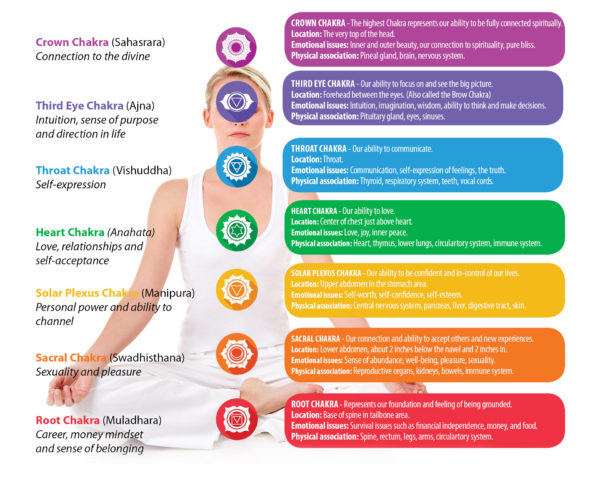
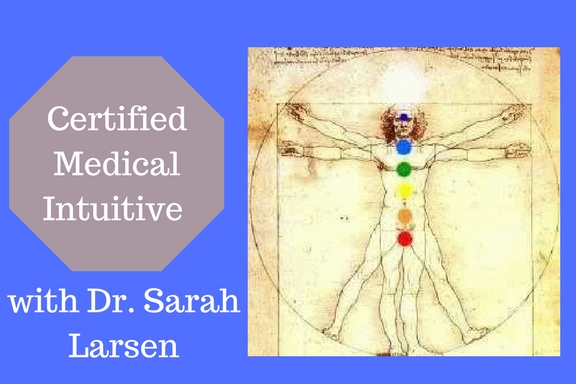
Our bodies contain seven major chakras or energy centers and 122 minor chakras. The major chakras are located at the base of the spine (Root Chakra), at the navel (Sacral Chakra), in the solar plexus (Solar Plexus Chakra), within your heart (Heart Chakra), within the throat (Throat Chakra), at the center of your forehead (Brow or Third Eye Chakra), and at the top of your head (Crown Chakra). These chakras are linked together with all other energy systems in the body and various layers of the auras.

The Speed of the chakra spin is key to vibrant health. The other keys to vibrant health that relates to the chakra is ensuring they are clear of negative energy and that they are perfectly shaped and not distorted.

The Five Rites speed up the spinning of the chakras, coordinate their spin so they are in complete harmony, distribute pure prana energy to the endocrine system, and in turn to all organs and processes in the body. This is one of the major requirements for vibrant health, rejuvenation, and youthfulness.

The Five Rites Exercise Program at Creative Chakra Spa

This program is a modified yoga program. Simply put, yoga is a science that unites the body, mind and spirit. Today this is often called Mind/ Body Healing. We believe that yoga was brought to Tibet from India in the 11th or 12th century and that Tibetan monks over time developed modified these exercises and developed an effective program of exercises that western society now calls the “Five Tibetan Rites”. The rugged mountainous conditions these monks live in may well account for their particular emphasis on vigor. Many of the yoga exercises and practices being taught in the western world today are very new. The “Five Tibetan Rites” are exactly what the ancient Tibetans developed over many centuries of time. Therefore it’s very important to do the “Five Tibetan Rites” exactly as they are presented without altering the form or sequence to achieve some of the benefits accrued to these “Rites”.Warm-up ExercisesThe following group of exercises has been developed to open, relax, release tension, to strengthen various parts of the body, and to provide toning to different parts of your body.

If you are overweight, in poor physical condition, or experiencing serious illness, this group of exercises is an excellent to help you begin your journey towards physical fitness. I suggest you do these warm-up exercises prior to the Five Rites if you are overweight or have not exercised in a long time.

This group of exercises 10 warm up of each!

Warm up

Warm-Up Exercise #1

Stand upright, tilt your head sideways towards your left shoulder and hold it for five seconds, then tilt your head towards your chest and hold it 5 seconds. Then tilt your head towards your left Shoulder and hold it five seconds, and lastly tilt your head backward and hold it five seconds. Return your head to a normal position.

Breathing: Exhale as you move your head around, and inhale as you return to the upright position.  

Warm-Up Exercise #2

Stand upright, slowly rotate your shoulders in a forward circular motion 5 times, then reverse the movement and rotate your shoulders in a backward circular motion 5 times.

Breathing: Breathe normally but deeply as you do this exercise.


 Warm-Up Exercise #3

Stand upright with your arms help up, your elbows bent, and your hands together in front of your chest, with your fingertips touching and palms apart. Press inward on your fingers until their inside surfaces are almost touching. Your palms should not be touching. Release and press your fingers again.

Breathing: Breathe normally. 


Warm-Up Exercise #4

In a relaxed standing position, hold your arms in front of you. Clasp your right hand around your left wrist, with your thumb against the inside of the wrist. Squeeze gently but firmly five times. Repeat the procedure with the left hand Squeezing the right wrist

.Breathing: Breathe normally. 

Warm-Up Exercise #5

Recline on the floor, resting the upper part of your body on your upper arms. Flex your knees and rhythmically bang them up and down against the floor in rapid succession. Your heels should remain on the floor throughout this exercise. Do this exercise for 20 – 30 seconds.

Breathing: Breathe normally through this exercise.

Warm-Up Exercise #6

Get down on the floor on your hands and Knees with your hands positioned under your shoulders and your knees under your hips. Bring your chin up and rotate your hips so the tailbone moves up, arching your back down. Then tuck your chin into your chest and rotate your back so that your pelvis moves down, arching you’re your back down.

Breathing: Inhale as you move your tailbone up and exhale as you move your tailbone down. 


Jessie May


The Five Tibetan Rites

Rite #1

Stand erect with arms outstretched horizontal to the floor, palms facing down. Your arms should be in line with your shoulders. Spin around clockwise until you become slightly dizzy. Gradually increase the number of spins from 1 spin to 21 spins.

Breathing: Inhale and exhale deeply as you do the spins. 

Rite #2

Lie flat on the floor, face up. Fully extend your arms Along your sides and place the palms of your hands against the floor, keeping fingers close together. Then raise your head off the floor tucking your chin into your chest. As you do this, lift your legs, knees straight, into a vertical position. If possible, extend the legs over the body towards your head. Do not let the knees bend. Then slowly lower the legs and head to the floor, always Keeping the knees straight. Allow the muscles to relax, and repeat.

Breathing: Breathe in deeply as you lift your head and legs and exhale as you lower your head and legs.

Rite #3

Kneel on the floor with the body erect. The hands should be placed on the backs of your thigh muscles. Incline the head and neck forward, tucking your chin in against your chest. Then throw the head and neck backward, arching the spine. Your toes should be curled under through this exercise. As you arch, you will brace your arms and hands against the thighs for support. After the arching returns your body to an erect position and begin the rite all over again.

Breathing: Inhale as you arch the spine and exhale as you return to an erect position.

Rite #4

Sit down on the floor with your legs straight out in front of you and your feet about 12″ apart. With the trunk of the body erect, place the palms of your hands on the floor alongside your buttocks. Then tuck the chin forward against the chest. Now drop the head backward as far as it will go. At the same time raise your body so that the knees bend while the arms remain straight. Then tense every muscle in your body.

Finally, let the muscles relax as you return to your original sitting position. Rest before repeating this Rite.   

Breathing: Breathe in as you raise up, hold your breath as you tense the muscles, and breathe out fully as you come down. 

Rite #5

Lie down with your face down to the floor. You will be supported by the hands palms down against the floor and the toes in the flexed position. Throughout this rite, the hands and feet should be kept straight. Start with your arms perpendicular to the Floor, and the spine arched, so that the body Is in a sagging position. Now throw the head back as far as possible. The, bending at the hips, bring the body up into an inverted “V”. At the same time, bring the chin forward, Tucking it against the chest.

Breathing: Breathe in deeply as you raise the body, and exhale fully as you lower the body.
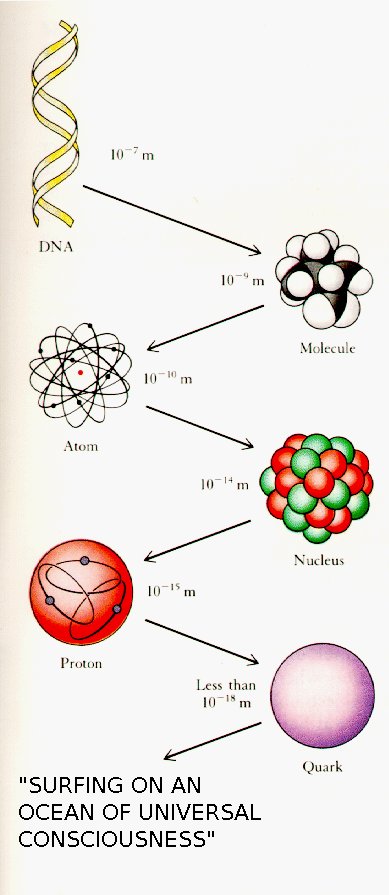
What is Epigenetics

Epigenetics, as a simplified definition, is the study of biological mechanisms that will switch genes on and off.

What are genes?
A gene is the basic physical and functional unit of heredity. Genes are made up of DNA. Some genes act as instructions to make molecules called proteins. … Every person has two copies of each gene, one inherited from each parent.

Gene or plural noun: genes (in informal use) is a unit of heredity which is transferred from a parent to offspring and is held to determine some characteristic of the offspring.

Your proteins are coded directly by your genes!

Genes, in technical terms, is a distinct sequence of nucleotides forming part of a chromosome. The order of which determines the order of monomers in a polypeptide or nucleic acid molecule which a cell (or virus) may synthesize.

You are made up of:

  • Cells are fundamental working units of every human being. All the instructions required to direct their activities are contained within the chemical deoxyribonucleic acid, also known as DNA.
  • DNA from humans is made up of approximately 3 billion nucleotide bases. There are four fundamental types of bases that comprise DNA – adenine, cytosine, guanine, and thymine, commonly abbreviated as A, C, G, and T, respectively.
  • The sequence, or the order, of the bases is what determines our life instructions.  Interestingly enough, our DNA sequence is mostly similar to that of a chimpanzee. Only a fraction of distinctively different sequences makes us human.
  • Within the 3 billion bases, there are about 20,000 genes. Genes are specific sequences of bases that provide instructions on how to make important proteins – complex molecules that trigger various biological actions to carry out life functions.

In other words, Your DNA gives the instructions for various functional proteins to be produced inside your cells. This is the central
principle or set of principles laid down by a Scientific authority as incontrovertibly true.

Genetics has a new central principle called epigenetics.

Epigenetics affects how genes are read by cells, and subsequently whether the cells should produce relevant proteins.

Epigenetics: Myths and Facts

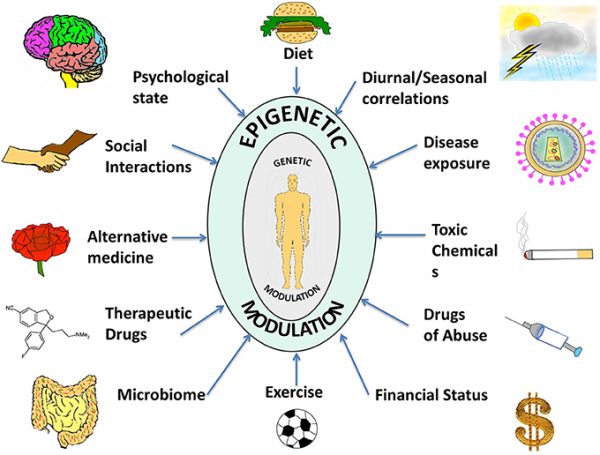
It used to be thought that we were born with a fixed genetic blueprint that determined our traits, behaviors, and health. Now, discoveries in the field of epigenetics have radically rebooted this theory by demonstrating that our DNA is more of a switchboard than a blueprint. Epigenetics is the study of how external forces, such as your environment and life experiences, trigger on-off mechanisms on the genetic switchboard. Epigenetic scientists are examining the mechanisms by which genes become expressed or silenced with the goal of understanding how we can influence their activity and change our genetic health outcomes. 

  • Epigenetics Controls Genes. This is achieved through (a) nature: epigenetics is what determines a cell’s specialization (e.g., skin cell, blood cell, hair cell, liver cells, etc.) as a fetus develops into a baby through gene expression (active) or silencing (dormant); and (b) nurture: environmental stimuli can also cause genes to be turned off or turned on.
  • Epigenetics Is Everywhere. What you eat, where you live, who you interact with, when you sleep, how you exercise, even aging – all of these can eventually cause chemical modifications around the genes that will turn those genes on or off over time. Additionally, in certain diseases such as cancer or Alzheimer’s, various genes will be switched into the opposite state, away from the normal/healthy state.
  • Epigenetics Makes Us Unique. Even though we are all human, why do some of us have blonde hair or darker skin? Why do some of us hate the taste of mushrooms or eggplants? Why are some of us more sociable than others? The different combinations of genes that are turned on or off is what makes each one of us unique. Furthermore, there have been indications that some epigenetic changes can be inherited.
  • Epigenetics Is Reversible. With 20,000+ genes, what will be the result of the different combinations of genes being turned on or off? The possible arrangements are enormous! But if we could map every single cause and effect of the different combinations, and if we could reverse the gene’s state to keep the good while eliminating the bad… then we could theoretically* cure cancer, slow aging, stop obesity, and so much more.

Presented in Nessa Carey’s book Epigenetics Revolution!

Think of your lifespan as a very long movie. Your cells are the actors and actresses that are essential units that make up your movie. Your DNA, in turn, is your script — instructions for all the participants of the movie to perform their roles.

Then your DNA sequence are the words on the script, and certain blocks of these words that instruct key actions or events to take place would be the genes.

The concept of genetics would be like screenwriting. Follow the analogy so far? Great. The concept of epigenetics, then, would be like directing.

The script can be the same, but the director can choose to eliminate or tweak certain scenes or dialogue, altering the movie for better or worse. After all, Steven Spielberg’s finished product would be drastically different than Woody Allen’s for the same movie script, wouldn’t it?

Are you Making Yourself Miserable?

How to Stop the cycle of Misery!

“People want to be happy, and all the other things they want are typically meant to be a means to that end.” … “We are happy when we have family, we arehappy when we have friends and almost all the other things we think make us happy are actually just ways of getting more family and friends.”
“Our brain accepts what the eyes see and our eye looks for whatever our brain wants.” 
~ Daniel Gilbert, Stumbling on Happiness

Misery:

  1. a state or feeling of great distress or discomfort of mind or body.”she went upstairs and cried in misery”synonyms:unhappiness, distress, wretchedness, hardship, suffering, affliction, anguish, anxiety, angst, torment, torture, hell, agony, pain, discomfort, deprivation, poverty, grief, heartache, heartbreak, heartbrokenness, despair, despondency, dejection, depression, desolation, gloom, gloominess, low spirits, moroseness, doldrums, melancholy, melancholia, woe, sadness, sorrow; More
    • a cause or source of great distress or discomfort.plural noun: miseries“the miseries of war”synonyms:affliction, misfortune, difficulty, problem, adversity, ordeal, trouble, hardship, deprivation; 

“If someone offered you a pill that would make you permanently happy, you would be well advised to run fast and run far. Emotion is a compass that tells us what to do, and a compass that perpetually stuck on north is worthless.” 
~Daniel Gilbert

How do you make yourself miserable in advance?

Do your fears or attachments to a future result cause you to diminish your energy, light, and love now?

How to stop
creating pain in your life today because of an imagined, future misery.

You might be concerned with future events or just have subtle energy around future events that you can shift with deeper insight. 

Or you might have had a past incident that is still hard to let go of!

It may just be an unlabeled feeling or emotion!

Whatever it might be it’s time to just say no to future misery!

If you are co creating based on your biology, beliefs, and possibilities than you must bring yourself into the now!


We all know the past is history, the future mystery, and this moment is a
gift! Ah, get the gift that you are and stop making yourself miserable, or apathetic, or less than you are here to be!

All healing happens in the NOW!
Create what you want to feel by truly accepting all that is!
Accepting it mean consent to receive (a thing offered). If it already happened accepting it in the current moment allows your energy to most fully create the future!

Acceptance does not mean approval.
Acceptance is not the same as approval and approval is not the same as acceptance. Acceptance is something any one person can give to any other person. You don’t need any training or qualifications to accept somebody. Acceptance means, “I receive you as you are.”

You are here to blaze a new path!
To be a leader and the light that you are! Just say no to future misery!
This live web meeting is for you if you want to ground yourself more deeply to your truth, your wisdom, and the intuition of your mind, body, and soul. Be here now and stop creating unnecessary pain!

Thank you for being in Miracle Makers Academy:

We believe that you are part of our global family!
We empower, support and mentor all we can to build a supportive, sustainable and just world for all beings!

We believe you are special and that everyone has the sam amount of
essence of specialness!

You don’t have to believe what we believe, we want to support you in getting your message out and for you to know yourself!
You are here to do miraculous things!
You are a unique individual and we want you to
HEAL, FEEL, and THRIVE!

Access to new Master Classes and our library of guided meditations is
part of the Miracle Makers Academy!

You can transform your relationships with the support of the academy and our beautiful community of Miracle Makers! 

The purpose of the Miracle Makers Academy is to empower you to be the healthiest and happiest version of yourself in relationship to people you cherish, admire, and inspire!  Miracle Makers support you in leading a meaningful, self-expressed, and fulfilled life!

Accept being wrong or right!

Here is one Miracle Maker’s experience with the MasterClass:

“Before attending a MasterClass, I believed that I was broken. Crippled with multiple back surgeries, a tight heart from a failed marriage, lost thoughts running around in my brain, and a career in shambles, I thought that I was just powerless. But, something shifted in the way I saw the world as a result of this class. Instead of feeling like a victim, I had a fresh start. Instead of seeing loss, I started to see possibilities.For example, what if my vulnerabilities connected me to others with unbridled empathy? But, it just wasn’t my thoughts that changed. Within days of this session, my life was actually changed. First, a new home. Then, new career interviews. And even further, new dating possibilities…Could just one session really transform a life? Really? Yes. It did! And, it will for you too!”~ Andrew

The Science of Hope -(KEU)

David Tegenfeldt’s reflection on the meaning of ‘hope’— _

“Commonly today, people use the term “hope” to express a wish, desire, or something they dream of. However, if we look at the Indo-European root of the word “hope” and at the Hebrew and Greek equivalents of the word “hope”, we get a somewhat different understanding of the word than how it is used in common parlance.

The Indo-European root of the word “hope” is the same root from which the word “curve” (to bend) comes from. Therefore, the root of the word “hope” gives us the connotation of a change in direction; going in a different way.

The Hebrew and Greek equivalent of our English word “hope” has the meaning of a strong and confident expectation. This meaning stands in contrast to “wishful thinking.”

Putting the Indo-European root and the Hebrew and Greek equivalent together, yields a meaning of the word “hope” as a confident expectation that a desirable change is likely to happen.

Percy Shelley, the 19th century romantic poet, in talking about “the moral imagination” said, “a man to be greatly good must imagine clearly, he must see himself and the world through the eyes of another and of many others

“As soon as you trust yourself, you will know how to live.” –Johann Wolfgang von Goethe

“You cannot be lonely if you like the person you’re alone with.” –Wayne Dyer”Just pick a goal, a goal you truly want to achieve, and take a clear-eyed look at your weaknesses–not so you’ll feel less confident, but so you can determine exactly what you need to work on. Then get to work. Celebrate small successes. Analyze your weaknesses. Keep going. As you gain skill, you’ll also gain a feeling of genuine confidence, one that can never be taken away–because you’ve earned it.” (OK, that one is mine, he said, blushing.)


Jan Phillips wrote in “The Art Of Original Thinking” ~ The making of a Thought Leader thoughts on hope. She believes that originality is a practice that can be learned, or rather rediscovered, with the engines of attention and surrender. This kind of thinking moves beyond dualities and discovers the connections between people and the oneness of the entire human family. With many illustrations from artists and creative individuals in the corporate world, Phillips reveals how the practice of uniting the opposites makes for a synthesis that makes a difference. Another point she makes is that visionaries must be willing to embrace mysteries and not try to know everything:

“Mysticism is an experience of communion. It is an embodied awareness of oneness, an intuitive recognition that the whole is in all of the parts. If religion were intelligence, mysticism would be wisdom. If religion were the recipe, mysticism would be the meal. Mysticism is the outer brought inward. It is not the knowledge of something, but the experience of something.”

Phillips makes a good case for this kind of spiritual intelligence and its role in creating a better world. She quotes philosopher Jacob Needleman who has written:

“No one person can answer the question of meaning in this world today. It is in thinking together, under the strong conditions of serious search, that a new understanding can be approached. Group communication, group pondering, is the real art form of our time.”

The Surprising habits of Original
Thinkers | Adam Grant

“Don’t waste your energy trying to change opinions … do your thing, and don’t care if they like it.” –Tina Fey

“Pride is holding your head up when everyone around you has theirs bowed. Courage is what makes you do it.” –Bryce Courtenay

“The way to develop self-confidence is to do the thing you fear and get a record of successful experiences behind you.” –William Jennings Bryan

“If you hear a voice within you say ‘you cannot paint,’ then by all means paint, and that voice will be silenced.” –Vincent van Gogh

“Always be yourself and have faith in yourself. Do not go out and look for a successful personality and try to duplicate it.” –Bruce Lee

“Don’t wait until everything is just right. It will never be perfect. There will always be challenges, obstacles, and less than perfect conditions. So what? Get started now. With each step you take, you will grow stronger and stronger, more and more skilled, more and more self-confident, and more and more successful.” –Mark Victor Hansen

“You wouldn’t worry so much about what others think of you if you realized how seldom they do.” –Eleanor Roosevelt

“Low self-confidence isn’t a life sentence. Self-confidence can be learned, practiced, and mastered–just like any other skill. Once you master it, everything in your life will change for the better.” –Barrie Davenport

“Once we believe in ourselves, we can risk curiosity, wonder, spontaneous delight, or any experience that reveals the human spirit.” –E.E. Cummings

“Trust yourself. Create the kind of self that you will be happy to live with all your life. Make the most of yourself by fanning the tiny, inner sparks of possibility into flames of achievement.” –Golda Meir

“One important key to success is self-confidence. An important key to self-confidence is preparation.” —Arthur Ashe

“It is confidence in our bodies, minds, and spirits that allows us to keep looking for new adventures.” —Oprah Winfrey

“To be yourself in a world that is constantly trying to make you something else is the greatest accomplishment.” –Ralph Waldo Emerson

“But failure has to be an option in art and in exploration–because it’s a leap of faith. And no important endeavor that required innovation was done without risk. You have to be willing to take those risks.” –James Cameron

“People are like stained-glass windows. They sparkle and shine when the sun is out, but when the darkness sets in their true beauty is revealed only if there is light from within.” –Elisabeth Kübler-Ross

“Confidence comes not from always being right but from not fearing to be wrong.” –Peter T. McIntyre

“Argue for your limitations and, sure enough, they’re yours.” –Richard Bach

“The courage to be is the courage to accept oneself, in spite of being unacceptable.” –Paul Tillich

“If we all did the things we are capable of doing, we would literally astound ourselves.” –Thomas Alva Edison

“Shyness has a strange element of narcissism, a belief that how we look, how we perform, is truly important to other people.” –Andre Dubus

“Our deepest fear is not that we are inadequate. Our deepest fear is that we are powerful beyond measure. It is our light, not our darkness, that most frightens us. We ask ourselves, ‘Who am I to be brilliant, gorgeous, talented, fabulous?’ Actually, who are you not to be?” –Marianne Williamson

“Talk to yourself like you would to someone you love.” –Brené Brown

“Trust yourself. You know more than you think you do.” –Dr. Benjamin Spock

“Successful people have fear, successful people have doubts, and successful people have worries. They just don’t let these feelings stop them.” –T. Harv Eker

“You can have anything you want if you are willing to give up the belief that you can’t have it.” –Dr. Robert Anthony

“It is not the mountain we conquer, but ourselves.” –Sir Edmund Hillary

“To love oneself is the beginning of a lifelong romance.” –Oscar Wilde

“I had to grow to love my body. I did not have a good self-image at first. Finally it occurred to me, I’m either going to love me or hate me. And I chose to love myself. Then everything kind of sprung from there. Things that I thought weren’t attractive became sexy. Confidence makes you sexy.” –Queen Latifah

“You yourself, as much as anyone in the entire universe, deserve your love and affection.” –Buddha

“Inaction breeds doubt and fear. Action breeds confidence and courage. If you want to conquer fear, do not sit home and think about it. Go out and get busy.” –Dale Carnegie

“Optimism is the faith that leads to achievement. Nothing can be done without hope and confidence.” –Helen Keller

“Nothing can stop the man with the right mental attitude from achieving his goal; nothing on earth can help the man with the wrong mental attitude.” –Thomas Jefferson

“Confidence is a habit that can be developed by acting as if you already had the confidence you desire to have.” –Brian Tracy

“When I started counting my blessings, my whole life turned around.” –Willie Nelson

“If you are insecure, guess what? The rest of the world is too. Do not overestimate the competition and underestimate yourself. You are better than you think.” –T. Harv Eker

“Wouldn’t it be powerful if you fell in love with yourself so deeply that you would do just about anything if you knew it would make you happy? This is precisely how much life loves you and wants you to nurture yourself. The deeper you love yourself, the more the universe will affirm your worth. Then you can enjoy a lifelong love affair that brings you the richest fulfillment from inside out.” –Alan Cohen

“To anyone that ever told you you’re no good … They’re no better.” –Hayley Williams

“Always remember you are braver than you believe, stronger than you seem, and smarter than you think.” –Christopher Robin

“You have no control over other people’s taste, so focus on staying true to your own.” –Tim Gunn

“No one can make you feel inferior without your consent.” –Eleanor Roosevelt

“The moment you doubt whether you can fly, you cease forever to be able to do it.” –J.M. Barrie

“It’s a dead-end street if you sit around waiting for someone else to tell you you’re OK.” –Michael Pitt

“I think that the power is the principle. The principle of moving forward, as though you have the confidence to move forward, eventually gives you confidence when you look back and see what you’ve done.” –Robert Downey Jr.

“If you’re presenting yourself with confidence, you can pull off pretty much anything.” –Katy Perry

“Twenty years from now, you will be more disappointed by the things you didn’t do than by the ones you did do. So throw off the bowlines. Sail away from the safe harbor. Catch the trade winds in your sail. Explore. Dream. Discover.” –Mark Twain

“I’ve finally stopped running away from myself. Who else is there better to be?” –Goldie Hawn

“Don’t be satisfied with stories, how things have gone with others. Unfold your own myth.” –Rumi

“We avoid the things that we’re afraid of because we think there will be dire consequences if we confront them. But the truly dire consequences in our lives come from avoiding things that we need to learn about or discover.” –Shakti Gawain

“Persons of high self-esteem are not driven to make themselves superior to others; they do not seek to prove their value by measuring themselves against a comparative standard. Their joy is being who they are, not in being better than someone else.” –Nathaniel Branden

“Reflect upon your present blessings, of which every man has many–not on your past misfortunes, of which all men have some.” –Charles Dickens

“Tension is who you think you should be, relaxation is who you are.” –Chinese proverb

The first thing I want to do is say thank you to all of you. The second thing I want to do is introduce my co-author and dear friend and co-teacher. Ken and I have been working together for almost 40 years. That’s Ken Sharpe over there.

So there is among many people — certainly me and most of the people I talk to — a kind of collective dissatisfaction with the way things are working, with the way our institutions run. Our kids’ teachers seem to be failing them. Our doctors don’t know who the hell we are, and they don’t have enough time for us. We certainly can’t trust the bankers, and we certainly can’t trust the brokers. They almost brought the entire financial system down. And even as we do our own work, all too often, we find ourselves having to choose between doing what we think is the right thing and doing the expected thing, or the required thing, or the profitable thing. So everywhere we look, pretty much across the board, we worry that the people we depend on don’t really have our interests at heart. Or if they do have our interests at heart, we worry that they don’t know us well enough to figure out what they need to do in order to allow us to secure those interests. They don’t understand us. They don’t have the time to get to know us.

There are two kinds of responses that we make to this sort of general dissatisfaction. If things aren’t going right, the first response is: let’s make more rules, let’s set up a set of detailed procedures to make sure that people will do the right thing. Give teachers scripts to follow in the classroom, so even if they don’t know what they’re doing and don’t care about the welfare of our kids, as long as they follow the scripts, our kids will get educated. Give judges a list of mandatory sentences to impose for crimes, so that you don’t need to rely on judges using their judgment. Instead, all they have to do is look up on the list what kind of sentence goes with what kind of crime. Impose limits on what credit card companies can charge in interest and on what they can charge in fees. More and more rules to protect us against an indifferent, uncaring set of institutions we have to deal with.

Or — or maybe and — in addition to rules, let’s see if we can come up with some really clever incentives so that, even if the people we deal with don’t particularly want to serve our interests, it is in their interest to serve our interest — the magic incentives that will get people to do the right thing even out of pure selfishness. So we offer teachers bonuses if the kids they teach score passing grades on these big test scores that are used to evaluate the quality of school systems.

Rules and incentives — “sticks” and “carrots.” We passed a bunch of rules to regulate the financial industry in response to the recent collapse. There’s the Dodd-Frank Act, there’s the new Consumer Financial Protection Agency that is temporarily being headed through the backdoor by Elizabeth Warren. Maybe these rules will actually improve the way these financial services companies behave. We’ll see. In addition, we are strugglingto find some way to create incentives for people in the financial services industry that will have them more interested in serving the long-term interests even of their own companies, rather than securing short-term profits. So if we find just the right incentives, they’ll do the right thing — as I said — selfishly, and if we come up with the right rules and regulations, they won’t drive us all over a cliff. And Ken [Sharpe] and I certainly know that you need to reign in the bankers. If there is a lesson to be learned from the financial collapse it is that.

But what we believe, and what we argue in the book, is that there is no set of rules, no matter how detailed, no matter how specific, no matter how carefully monitored and enforced, there is no set of rules that will get us what we need. Why? Because bankers are smart people. And, like water, they will find cracks in any set of rules. You design a set of rules that will make sure that the particular reason why the financial system “almost-collapse” can’t happen again. It is naive beyond description to think that having blocked this source of financial collapse, you have blocked all possible sources of financial collapse. So it’s just a question of waiting for the next one and then marveling at how we could have been so stupid as not to protect ourselves against that.

What we desperately need, beyond, or along with, better rules and reasonably smart incentives, is we need virtue. We need character. We need people who want to do the right thing. And in particular, the virtue that we need most of all is the virtue that Aristotle called “practical wisdom.” Practical wisdom is the moral will to do the right thing and the moral skill to figure out what the right thing is. So Aristotle was very interested in watching how the craftsmen around him worked. And he was impressed at how they would improvise novel solutions to novel problems — problems that they hadn’t anticipated. So one example is he sees these stonemasons working on the Isle of Lesbos, and they need to measure out round columns. Well if you think about it, it’s really hard to measure out round columns using a ruler. So what do they do? They fashion a novel solution to the problem. They created a ruler that bends, what we would call these days a tape measure — a flexible rule, a rule that bends. And Aristotle said, “Hah, they appreciated that sometimes to design rounded columns, you need to bend the rule.” And Aristotle said often in dealing with other people, we need to bend the rules.

Dealing with other people demands a kind of flexibility that no set of rules can encompass. Wise people know when and how to bend the rules. Wise people know how to improvise. The way my co-author , Ken, and I talk about it, they are kind of like jazz musicians. The rules are like the notes on the page, and that gets you started, but then you dance around the notes on the page, coming up with just the right combination for this particular moment with this particular set of fellow players. So for Aristotle, the kind of rule-bending, rule exception-finding and improvisation that you see in skilled craftsmen is exactly what you need to be a skilled moral craftsman. And in interactions with people, almost all the time, it is this kind of flexibility that is required.A wise person knows when to bend the rules. A wise person knows when to improvise. And most important, a wise person does this improvising and rule-bending in the service of the right aims. If you are a rule-bender and an improviser mostly to serve yourself, what you get is ruthless manipulation of other people. So it matters that you do this wise practice in the service of others and not in the service of yourself. And so the will to do the right thing is just as important as the moral skill of improvisation and exception-finding. Together they comprise practical wisdom, which Aristotle thought was the master virtue.

So I’ll give you an example of wise practice in action. It’s the case of Michael. Michael’s a young guy. He had a pretty low-wage job. He was supporting his wife and a child, and the child was going to parochial school.Then he lost his job. He panicked about being able to support his family. One night, he drank a little too much,and he robbed a cab driver — stole 50 dollars. He robbed him at gunpoint. It was a toy gun. He got caught. He got tried. He got convicted. The Pennsylvania sentencing guidelines required a minimum sentence for a crime like this of two years, 24 months. The judge on the case, Judge Lois Forer thought that this made no sense.He had never committed a crime before. He was a responsible husband and father. He had been faced with desperate circumstances. All this would do is wreck a family. And so she improvised a sentence — 11 months,and not only that, but release every day to go to work. Spend your night in jail, spend your day holding down a job. He did. He served out his sentence. He made restitution and found himself a new job. And the family was united.

And it seemed on the road to some sort of a decent life — a happy ending to a story involving wise improvisation from a wise judge. But it turned out the prosecutor was not happy that Judge Forer ignored the sentencing guidelines and sort of invented her own, and so he appealed. And he asked for the mandatory minimum sentence for armed robbery. He did after all have a toy gun. The mandatory minimum sentence for armed robbery is five years. He won the appeal. Michael was sentenced to five years in prison. Judge Forer had to follow the law. And by the way, this appeal went through after he had finished serving his sentence, so he was out and working at a job and taking care of his family and he had to go back into jail. Judge Forer did what she was required to do, and then she quit the bench. And Michael disappeared. So that is an example,both of wisdom in practice and the subversion of wisdom by rules that are meant, of course, to make things better.

Now consider Ms. Dewey. Ms. Dewey’s a teacher in a Texas elementary school. She found herself listening to a consultant one day who was trying to help teachers boost the test scores of the kids, so that the schoolwould reach the elite category in percentage of kids passing big tests. All these schools in Texas compete with one another to achieve these milestones, and there are bonuses and various other treats that come if you beat the other schools. So here was the consultant’s advice: first, don’t waste your time on kids who are going to pass the test no matter what you do. Second, don’t waste your time on kids who can’t pass the testno matter what you do. Third, don’t waste your time on kids who moved into the district too late for their scores to be counted. Focus all of your time and attention on the kids who are on the bubble, the so-called “bubble kids” — kids where your intervention can get them just maybe over the line from failing to passing. So Ms. Dewey heard this, and she shook her head in despair while fellow teachers were sort of cheering each other on and nodding approvingly. It’s like they were about to go play a football game. For Ms. Dewey, this isn’t why she became a teacher.

Now Ken and I are not naive, and we understand that you need to have rules. You need to have incentives.People have to make a living. But the problem with relying on rules and incentives is that they demoralizeprofessional activity, and they demoralize professional activity in two senses. First, they demoralize the peoplewho are engaged in the activity. Judge Forer quits, and Ms. Dewey in completely disheartened. And second,they demoralize the activity itself. The very practice is demoralized, and the practitioners are demoralized. It creates people — when you manipulate incentives to get people to do the right thing — it creates people who are addicted to incentives. That is to say, it creates people who only do things for incentives.

Now the striking thing about this is that psychologists have known this for 30 years. Psychologists have known about the negative consequences of incentivizing everything for 30 years. We know that if you reward kids for drawing pictures, they stop caring about the drawing and care only about the reward. If you reward kids for reading books, they stop caring about what’s in the books and only care about how long they are. If you reward teachers for kids’ test scores, they stop caring about educating and only care about test preparation. If you were to reward doctors for doing more procedures — which is the current system — they would do more. If instead you reward doctors for doing fewer procedures, they will do fewer. What we want, of course, is doctors who do just the right amount of procedures and do the right amount for the right reason — namely, to serve the welfare of their patients. Psychologists have known this for decades, and it’s time for policymakers to start paying attention and listen to psychologists a little bit, instead of economists.

And it doesn’t have to be this way. We think, Ken and I, that there are real sources of hope. We identify one set of people in all of these practices who we call canny outlaws. These are people who, being forced to operate in a system that demands rule-following and creates incentives, find away around the rules, find a way to subvert the rules. So there are teachers who have these scripts to follow, and they know that if they follow these scripts, the kids will learn nothing. And so what they do is they follow the scripts, but they follow the scripts at double-time and squirrel away little bits of extra time during which they teach in the way that they actually know is effective. So these are little ordinary, everyday heroes, and they’re incredibly admirable,but there’s no way that they can sustain this kind of activity in the face of a system that either roots them outor grinds them down.

So canny outlaws are better than nothing, but it’s hard to imagine any canny outlaw sustaining that for an indefinite period of time. More hopeful are people we call system-changers. These are people who are lookingnot to dodge the system’s rules and regulations, but to transform the system, and we talk about several. One in particular is a judge named Robert Russell. And one day he was faced with the case of Gary Pettengill.Pettengill was a 23-year-old vet who had planned to make the army a career, but then he got a severe back injury in Iraq, and that forced him to take a medical discharge. He was married, he had a third kid on the way,he suffered from PTSD, in addition to the bad back, and recurrent nightmares, and he had started using marijuana to ease some of the symptoms. He was only able to get part-time work because of his back, and so he was unable to earn enough to put food on the table and take care of his family. So he started selling marijuana. He was busted in a drug sweep. His family was kicked out of their apartment, and the welfare system was threatening to take away his kids.

Under normal sentencing procedures, Judge Russell would have had little choice but to sentence Pettengill to serious jail-time as a drug felon. But Judge Russell did have an alternative. And that’s because he was in a special court. He was in a court called the Veterans’ Court. In the Veterans’ Court — this was the first of its kind in the United States. Judge Russell created the Veterans’ Court. It was a court only for veterans who had broken the law. And he had created it exactly because mandatory sentencing laws were taking the judgment out of judging. No one wanted non-violent offenders — and especially non-violent offenders who were veterans to boot — to be thrown into prison. They wanted to do something about what we all know, namely the revolving door of the criminal justice system. And what the Veterans’ Court did, was it treated each criminal as an individual, tried to get inside their problems, tried to fashion responses to their crimes that helped them to rehabilitate themselves, and didn’t forget about them once the judgment was made. Stayed with them, followed up on them, made sure that they were sticking to whatever plan had been jointly developed to get them over the hump.

There are now 22 cities that have Veterans’ Courts like this. Why has the idea spread? Well, one reason is that Judge Russell has now seen 108 vets in his Veterans’ Court as of February of this year, and out of 108, guess how many have gone back through the revolving door of justice into prison. None. None. Anyone would glom onto a criminal justice system that has this kind of a record. So here’s is a system-changer, and it seems to be catching.

There’s a banker who created a for-profit community bank that encouraged bankers — I know this is hard to believe — encouraged bankers who worked there to do well by doing good for their low-income clients. The bank helped finance the rebuilding of what was otherwise a dying community. Though their loan recipients were high-risk by ordinary standards, the default rate was extremely low. The bank was profitable. The bankers stayed with their loan recipients. They didn’t make loans and then sell the loans. They serviced the loans. They made sure that their loan recipients were staying up with their payments. Banking hasn’t always been the way we read about it now in the newspapers. Even Goldman Sachs once used to serve clients,before it turned into an institution that serves only itself. Banking wasn’t always this way, and it doesn’t have to be this way.

So there are examples like this in medicine — doctors at Harvard who are trying to transform medical education, so that you don’t get a kind of ethical erosion and loss of empathy, which characterizes most medical students in the course of their medical training. And the way they do it is to give third-year medical students patients who they follow for an entire year. So the patients are not organ systems, and they’re not diseases; they’re people, people with lives. And in order to be an effective doctor, you need to treat people who have lives and not just disease. In addition to which there’s an enormous amount of back and forth,mentoring of one student by another, of all the students by the doctors, and the result is a generation — we hope — of doctors who do have time for the people they treat. We’ll see.20:45

So there are lots of examples like this that we talk about. Each of them shows that it is possible to build on and nurture character and keep a profession true to its proper mission — what Aristotle would have called its proper telos. And Ken and I believe that this is what practitioners actually want. People want to be allowed to be virtuous. They want to have permission to do the right thing. They don’t want to feel like they need to take a shower to get the moral grime off their bodies everyday when they come home from work.

Aristotle thought that practical wisdom was the key to happiness, and he was right. There’s now a lot of research being done in psychology on what makes people happy, and the two things that jump out in study after study — I know this will come as a shock to all of you — the two things that matter most to happiness are love and work. Love: managing successfully relations with the people who are close to you and with the communities of which you are a part. Work: engaging in activities that are meaningful and satisfying. If you have that, good close relations with other people, work that’s meaningful and fulfilling, you don’t much need anything else.

Well, to love well and to work well, you need wisdom. Rules and incentives don’t tell you how to be a good friend, how to be a good parent, how to be a good spouse, or how to be a good doctor or a good lawyer or a good teacher. Rules and incentives are no substitutes for wisdom. Indeed, we argue, there is no substitute for wisdom. And so practical wisdom does not require heroic acts of self-sacrifice on the part of practitioners. In giving us the will and the skill to do the right thing — to do right by others — practical wisdom also gives us the will and the skill to do right by ourselves.

OPEN:

Seven years ago, a student came to me and asked me to invest in his company.He said, “I’m working with three friends, and we’re going to try to disrupt an industry by selling stuff online.”And I said, “OK, you guys spent the whole summer on this, right?””No, we all took internships just in case it doesn’t work out.””All right, but you’re going to go in full time once you graduate.””Not exactly. We’ve all lined up backup jobs.”Six months go by,it’s the day before the company launches,and there is still not a functioning website.”You guys realize, the entire company is a website.That’s literally all it is.”So I obviously declined to invest.And they ended up naming the company Warby Parker.(Laughter)They sell glasses online.They were recently recognized as the world’s most innovative companyand valued at over a billion dollars.And now? My wife handles our investments.Why was I so wrong?To find out, I’ve been studying people that I come to call “originals.”Originals are nonconformists,people who not only have new ideasbut take action to champion them.They are people who stand out and speak up.Originals drive creativity and change in the world.They’re the people you want to bet on.And they look nothing like I expected.I want to show you today three things I’ve learnedabout recognizing originalsand becoming a little bit more like them.So the first reason that I passed on Warby Parkerwas they were really slow getting off the ground.Now, you are all intimately familiar with the mind of a procrastinator.Well, I have a confession for you. I’m the opposite. I’m a precrastinator.Yes, that’s an actual term.You know that panic you feel a few hours before a big deadlinewhen you haven’t done anything yet.I just feel that a few months ahead of time.(Laughter)So this started early: when I was a kid, I took Nintendo games very seriously.I would wake up at 5am,start playing and not stop until I had mastered them.Eventually it got so out of hand that a local newspaper cameand did a story on the dark side of Nintendo, starring me.(Laughter)(Applause)Since then, I have traded hair for teeth.(Laughter)But this served me well in college,because I finished my senior thesis four months before the deadline.And I was proud of that, until a few years ago.I had a student named Jihae, who came to me and said,”I have my most creative ideas when I’m procrastinating.”And I was like, “That’s cute, where are the four papers you owe me?”(Laughter)No, she was one of our most creative students,and as an organizational psychologist, this is the kind of idea that I test.So I challenged her to get some data.She goes into a bunch of companies.She has people fill out surveys about how often they procrastinate.Then she gets their bosses to rate how creative and innovative they are.And sure enough, the precrastinators like me,who rush in and do everything earlyare rated as less creativethan people who procrastinate moderately.So I want to know what happens to the chronic procrastinators.She was like, “I don’t know. They didn’t fill out my survey.”(Laughter)No, here are our results.You actually do see that the people who wait until the last minuteare so busy goofing off that they don’t have any new ideas.And on the flip side, the people who race inare in such a frenzy of anxiety that they don’t have original thoughts either.There’s a sweet spot where originals seem to live.Why is this?Maybe original people just have bad work habits.Maybe procrastinating does not cause creativity.To find out, we designed some experiments.We asked people to generate new business ideas,and then we get independent readersto evaluate how creative and useful they are.And some of them are asked to do the task right away.Others we randomly assign to procrastinateby dangling Minesweeper in front of themfor either five or 10 minutes.And sure enough, the moderate procrastinatorsare 16 percent more creative than the other two groups.Now, Minesweeper is awesome, but it’s not the driver of the effect,because if you play the game first before you learn about the task,there’s no creativity boost.It’s only when you’re told that you’re going to be working on this problem,and then you start procrastinating,but the task is still active in the back of your mind,that you start to incubate.Procrastination gives you time to consider divergent ideas,to think in nonlinear ways, to make unexpected leaps.So just as we were finishing these experiments,I was starting to write a book about originals,and I thought, “This is the perfect time to teach myself to procrastinate,while writing a chapter on procrastination.”So I metaprocrastinated,and like any self-respecting precrastinator,I woke up early the next morningand I made a to-do list with steps on how to procrastinate.(Laughter)And then I worked diligentlytoward my goal of not making progress toward my goal.I started writing the procrastination chapter,and one day — I was halfway through –I literally put it away in mid-sentencefor months.It was agony.But when I came back to it, I had all sorts of new ideas.As Aaron Sorkin put it,”You call it procrastinating. I call it thinking.”And along the way I discoveredthat a lot of great originals in history were procrastinators.Take Leonardo da Vinci.He toiled on and off for 16 yearson the Mona Lisa.He felt like a failure.He wrote as much in his journal.But some of the diversions he took in opticstransformed the way that he modeled lightand made him into a much better painter.What about Martin Luther King, Jr.?The night before the biggest speech of his life,the March on Washington,he was up past 3am, rewriting it.He’s sitting in the audience waiting for his turn to go onstage,and he is still scribbling notes and crossing out lines.When he gets onstage, 11 minutes in,he leaves his prepared remarksto utter four words that changed the course of history:”I have a dream.”That was not in the script.By delaying the task of finalizing the speech until the very last minute,he left himself open to the widest range of possible ideas.And because the text wasn’t set in stone,he had freedom to improvise.Procrastinating is a vice when it comes to productivity,but it can be a virtue for creativity.What you see with a lot of great originalsis that they are quick to start but they’re slow to finish.And this is what I missed with Warby Parker.When they were dragging their heels for six months,I looked at them and said,”You know, a lot of other companies are starting to sell glasses online.”They missed the first-mover advantage.But what I didn’t realize was they were spending all that timetrying to figure out how to get peopleto be comfortable ordering glasses online.And it turns out the first-mover advantage is mostly a myth.Look at a classic study of over 50 product categories,comparing the first movers who created the marketwith the improvers who introduced something different and better.What you see is that the first movers had a failure rate of 47 percent,compared with only 8 percent for the improvers.Look at Facebook, waiting to build a social networkuntil after Myspace and Friendster.Look at Google, waiting for years after Altavista and Yahoo.It’s much easier to improve on somebody else’s ideathan it is to create something new from scratch.So the lesson I learned is that to be original you don’t have to be first.You just have to be different and better.But that wasn’t the only reason I passed on Warby Parker.They were also full of doubts.They had backup plans lined up,and that made me doubt that they had the courage to be original,because I expected that originals would look something like this.(Laughter)Now, on the surface,a lot of original people look confident,but behind the scenes,they feel the same fear and doubt that the rest of us do.They just manage it differently.Let me show you: this is a depictionof how the creative process works for most of us.(Laughter)Now, in my research, I discovered there are two different kinds of doubt.There’s self-doubt and idea doubt.Self-doubt is paralyzing.It leads you to freeze.But idea doubt is energizing.It motivates you to test, to experiment, to refine,just like MLK did.And so the key to being originalis just a simple thingof avoiding the leap from step three to step four.Instead of saying, “I’m crap,”you say, “The first few drafts are always crap,and I’m just not there yet.”So how do you get there?Well, there’s a clue, it turns out,in the Internet browser that you use.We can predict your job performance and your commitmentjust by knowing what web browser you use.Now, some of you are not going to like the results of this study –(Laughter)But there is good evidence that Firefox and Chrome userssignificantly outperform Internet Explorer and Safari users.Yes.(Applause)They also stay in their jobs 15 percent longer, by the way.Why? It’s not a technical advantage.The four browser groups on average have similar typing speedand they also have similar levels of computer knowledge.It’s about how you got the browser.Because if you use Internet Explorer or Safari,those came preinstalled on your computer,and you accepted the default option that was handed to you.If you wanted Firefox or Chrome, you had to doubt the defaultand ask, is there a different option out there,and then be a little resourceful and download a new browser.So people hear about this study and they’re like,”Great, if I want to get better at my job, I just need to upgrade my browser?”(Laughter)No, it’s about being the kind of personwho takes the initiative to doubt the defaultand look for a better option.And if you do that well,you will open yourself up to the opposite of déjà vu.There’s a name for it. It’s called vuja de.(Laughter)Vuja de is when you look at something you’ve seen many times beforeand all of a sudden see it with fresh eyes.It’s a screenwriter who looks at a movie scriptthat can’t get the green light for more than half a century.In every past version, the main character has been an evil queen.But Jennifer Lee starts to question whether that makes sense.She rewrites the first act,reinvents the villain as a tortured heroand Frozen becomes the most successful animated movie ever.So there’s a simple message from this story.When you feel doubt, don’t let it go.(Laughter)What about fear?Originals feel fear, too.They’re afraid of failing,but what sets them apart from the rest of usis that they’re even more afraid of failing to try.They know you can fail by starting a business that goes bankruptor by failing to start a business at all.They know that in the long run, our biggest regrets are not our actionsbut our inactions.The things we wish we could redo, if you look at the science,are the chances not taken.Elon Musk told me recently, he didn’t expect Tesla to succeed.He was sure the first few SpaceX launcheswould fail to make it to orbit, let alone get back,but it was too important not to try.And for so many of us, when we have an important idea,we don’t bother to try.But I have some good news for you.You are not going to get judged on your bad ideas.A lot of people think they will.If you look across industriesand ask people about their biggest idea, their most important suggestion,85 percent of them stayed silent instead of speaking up.They were afraid of embarrassing themselves, of looking stupid.But guess what? Originals have lots and lots of bad ideas,tons of them, in fact.Take the guy who invented this.Do you care that he came up with a talking doll so creepythat it scared not only kids but adults, too?No. You celebrate Thomas Edison for pioneering the light bulb.(Laughter)If you look across fields,the greatest originals are the ones who fail the most,because they’re the ones who try the most.Take classical composers, the best of the best.Why do some of them get more pages in encyclopedias than othersand also have their compositions rerecorded more times?One of the best predictorsis the sheer volume of compositions that they generate.The more output you churn out, the more variety you getand the better your chances of stumbling on something truly original.Even the three icons of classical music — Bach, Beethoven, Mozart –had to generate hundreds and hundreds of compositionsto come up with a much smaller number of masterpieces.Now, you may be wondering,how did this guy become great without doing a whole lot?I don’t know how Wagner pulled that off.But for most of us, if we want to be more original,we have to generate more ideas.The Warby Parker founders, when they were trying to name their company,they needed something sophisticated, unique, with no negative associationsto build a retail brand,and they tested over 2,000 possibilitiesbefore they finally put togetherWarby and Parker.So if you put all this together, what you see is that originalsare not that different from the rest of us.They feel fear and doubt. They procrastinate.They have bad ideas.And sometimes, it’s not in spite of those qualities but because of themthat they succeed.So when you see those things, don’t make the same mistake I did.Don’t write them off.And when that’s you, don’t count yourself out either.Know that being quick to start but slow to finishcan boost your creativity,that you can motivate yourself by doubting your ideasand embracing the fear of failing to try,and that you need a lot of bad ideas in order to get a few good ones.Look, being original is not easy,but I have no doubt about this:it’s the best way to improve the world around us.Thank you.(Applause)English


Today we’re gonna look at how we can see organizations as systems.Ludwig von Bertalanffy and J. G. Millerestablished the foundations of general systems theoryin the 1960s and ’70s,and researchers in the organizational studies areaimported the systems metaphorof the living biological organismand the key terms that go along with itto pursue a richer understandingof how organizations worked.In 1966, for example, Daniel Katz and Robert Kahnpublished The Social Psychology of Organizationsthat applied systems theory’s conceptsto organizational life.I think it’s most helpful to see systemsas an alternative perspective at the time.Classical management era of organizational studieswas really the dominant view,and it saw organizations as machines,and that was the main way to view life in organizationsfor many decades.The goal of that classical management school of thoughtwas they wanted efficiency, productivity, and control,they were looking for the one right way,or as Frederick Taylor said, the one best wayto do every single task in the organization,and so when systems theory came alongit was really a whole ‘nother way to view life at work.A systems approach looks at the whole organism,not the little pieces of the machine,but how it all fits together as a whole.So the goal of the systems approachis to describe and explain how organizations work,they don’t have a control mindset,and they wanted to pursue multiple waysto accomplish the various goals of the organization,they’re not lookin’ for the one right way,so I think it’s best to understandthe systems approach as a counterpoint or an alternativeor even a reaction against the classical management eraand school of thought.So in an organization we have three main parts.We have a set of inputswhere we have resources, information that is neededto supply the organizational system,we also have the processes, or throughputs,that’s all the activity within the systemthat we need to do to accomplish work,and then we have the outputs,those are the outcomes, the products,the services created or delivered by the organization.Typical pizza place, for example,has inputs that you might expect,the people that are doing the work,the food, the ovens, the refrigerator,pizza boxes, and all the other materials,then you have your processes, or throughputs,where you make the dough, you cut the vegetables,and mix the sauce, answer the phones, take the orders,make the pizza, delegate the tasks,lots of work in a pizza place,and then you have outputs,which are hopefully pizza delivered to happy customers,you have a profit for the shop,hopefully your employees are getting good paychecks,you put the trash in the dumpsterand all the other kinds of waste material,those are also considered outputs of a system,and those are the three main parts.So systems here are clearly open,that’s one of the main concepts in systems theory,they’re open to their environment.And when we say environmentwe don’t just mean things like the weather,of course we’re not excluding that weather,but the environment more broadly.So you have permeable boundaries,where information comes in and out,resources flow both in and outof those boundaries around the organization,and you have an exchange with the environmentthat’s not just happeningbut it’s essential for the health of the system.So, constantly things are coming inand moving out of the systemto keep it healthy, to keep it functioning properly,and your environments that you’re in are very unpredictable,you can’t say for certainexactly what’s gonna happen with competitors,and exactly what’s gonna happen in the future,so you have the leaders that are scanning the environment,they’re called boundary spanners,and they’re looking at the environmentto see what the vendors are up to,what the customers are looking to do,what the competition is up to,where the general economy is headed,and they’re keeping an eye through environmental scanningon all of the things that are happeningin and around the organization to make better decisions.Holism is an important part of the systems approach,where systems are viewed as a whole,not simply as a collection of separate pieces,so you wouldn’t view yourself, your whole body,as just a collection of cells, you’re much more than that.Another way to say itis a system is greater than the sum of its parts.Some people use the term synergy here,which has a bad rap in some circles.Those parts of the system are interdependent,and they interact through mutual feedback processes.So, feedback is a dynamic processwhere the pieces of the system of that wholeare all interconnected.Interdependence is another leading conceptin the systems approach,where organizations are in a dynamicand interconnected relationship with their environment,for example, there are subparts within the systemthat are also interrelated, they’re not isolated.The organization is not simply isolatedand plopped down in a community,it’s connected to that community,and the pieces, the parts within that organization,are also interconnected,they’re made up of interconnected sub-systems,so you have a whole organizationand then you have, let’s say,some major departments within that organization,and then within those departments you have work teamsthat are also interrelated and overlapping.So, changes to one part of the systemdirectly or indirectly influence other parts.For example, if you had some people call in sickon one team, then other people in the organizationwould be at least indirectly affectedand have to maybe pick up some of that work.Maybe you hire a whole bunch of peoplein one part of the organization,and everybody’s going to have to get on boardand train them and adapt when you add people,so everything is interconnected.All the parts, either directly or indirectly,influence the other parts.Systems also have goals, but the goals, again,are not like classical management goalsof finding the one best way,goals are contingent and negotiated,so that means it depends on what exactlythe organization’s facing, and where it’s going,it’ll have to adapt along the wayas the situation develops.Equifinality is a powerful conceptto describe how systems people approach goals.The first part of equifinalityis that there’s no one best way to organize,and this, again, flies directly in the faceof people like Frederick Taylorwho were looking for the one best way.The second part of equifinality, however,makes the concept that much more powerful,that all ways of organizing are not equally effective.So what they’re not saying, is look,there’s no one best way, so let’s throw it all out.What they’re saying is,there may be not one single way to do everything,however, there are some ways that are better than others,you just can’t always know ahead of timeas you pursue your goals what those several good ways are.However, for example,if you want to travel from New York City on a road tripto Los Angeles, you cannot find one route at all timesthat’s the one best way.Depending on weather, time of year, traffic patterns,road conditions, you will have to lookfor a variety of ways to get there in that specific case.However, they’re not all the same.For example, if your travel companion,your co-pilot says, let’s go from New York Cityto Los Angeles on a road trip,but let’s go all the way up through Canada first,you’re probably gonna saythat’s not one of the better ways to do things.Feedback is also an important part of the systems approach,we have negative feedbackthat seeks to correct or reduce deviationsin a system’s processes to reestablish a steady courseback in the direction of the system’s goals,that’s negative feedback that corrects.Then you have positive feedbackthat changes or grows a system in desired waysthat amplify and enhance the system’s current processes.So you have positive feedbackthat gets you going in the direction you want to go faster.However, if you think about it,just like with kids, you can rewardthe wrong kinds of behavior accidentally,so positive feedback in this senseis not necessarily always good for a system.You might have a boss that’s screamingand yelling at everybody,and if that boss gets a promotionthat might be seen as positive feedbackthat would then amplify that boss’s approach,and maybe the people around that bosswould start to scream and yell at everybody too,’cause they’re seeing that that’s what’s being rewarded.And then eventually,people would have to give some negative feedback,say hey, let’s tone that down, we don’t wanna be like that,to get the system back on track.Entropy is a term that is central to the way systems work,it’s one that I think adds a lot of depth to this approach,and that is, systems tend to run down,they tend to deteriorate and move toward disorganization,so left on their own systems will run down.For example, if you just left your apartmentand didn’t clean it, and you were still living in itbut you left it on its ownand didn’t do the dishes, didn’t pick up,it would only take a day or twobefore it looked like a completely run down,deteriorated system,and that’s why we seek more balance.There’s energy, resources, informationcoming into the system to help it reach homeostasis,or equilibrium, those are both ways to say balance,so you have a whole lot of effort, and work, and timeput into maintaining a balance in the systemso it doesn’t on its own run down,and the same way if you stopped showering.Your body is a system, you stopped bathing,brushing your teeth,you would start to be noticed by your friends,they would say, wow, you’re not maintaining,you have to do that,otherwise you’re gonna continue to deteriorateand fall apart.Systems theory has not necessarily been usedin a lot of very specific ways as it is.It was more like an opening,an open door to lead us to a whole other setof precise theories to look at organizations.So, for example, complex adaptive systems,or chaos theory as it’s sometimes called,was built upon the foundation of systems theory.Learning organizations is another school of thoughtthat came out of systems thinking,and of course Karl Weick’s researchon loosely coupled systems is a direct outshootof the systems’ point of view on organizations,so systems theory has provided a powerful set of concepts,and a vocabulary, and a whole way of thinkingabout organizations that is a direct counterpointto the classical management era school of thought.

How to Get Lucky -Miracle Makers Frequency – Use the New Moon Energy!

ONLINE PARTY FOR THE NEW MOON
How do you use the New Moon to create Lucky Energy
Link up your natural resources to the Earth’s Resources
How to Understand you!

Activation and Miracle Frequency Initiation

The second video was dated. We discussed what was relevant at the time!

So this video is labeled part 3 and in the academy now!

THESE WORDS ARE FOR YOU! A GROUP WORKING WITH DR. SARAH WANT YOU TO HEAR THIS!

FROM THEIR HEART TO YOURS:

Hear what Students are saying about being in week 7 of Dr. Sarah’s

LIFE COACHING Manifesting Class


Use Up/Down Arrow keys to increase or decrease volume.

https://drsarahlarsen.com/wp-content/uploads/2011/05/class-testimonials.mp3


Learn more: Miracle Makers Academy Membership


https://drsarahlarsen.com/frequently-asked-questions-about-getting-a-session-with-dr-sarah-larsen/


“
The sun doesn’t try to make flowers grow. It just shines.” – Krishna Das.

The moon doesn’t try to be the sun!

You must align yourself with the elements!
This is why you must work with someone who can point out what is different in you!
You cannot see yourself!


Village Girl to Being able to say what I need to say!
Able to help, guide the most extraordinary people on our planet!
Make Miracles ~Miracle Makers Academy!
Largest project: Helping to build a hospital/medical School in the village my grandfather born in!
Most local project: Horse rescue and feeding/clothing the Homeless in Santa Monica


Left to right:
Founder of Unite4:Good: 
Anthony Melikhov 
Creator of Make-A-Wish Foundation
Frank Shankwitz 
Founder of Miracle Makers Academy
Dr. Sarah Larsen
Actor Starring in Wish Man 
ANDREW STEEL 
(TO STAR IN THE WISHMAN AS FRANK SHANKWITZ CREATOR OF THE MAKE-A-WISH FOUNDATION) 
To be Released Summer 2019


Your Soul is yours! It is also part of the spark from the very START of you! The oldest part is as old as the Universe and the youngest part just got recreated in this breath!


“Our scientific power has outrun our spiritual power. We have guided missiles and misguided men.”

“The hope of a secure and livable world lies with disciplined nonconformists who are dedicated to justice, peace and brotherhood.” ~Martin Luther King Jr

“Shallow understanding from people of good will is more frustrating than absolute misunderstanding from people of ill will.”


Masculine & Feminine: The Intimacy Cycle | Dr Sarah Larsen

Visualize your work being done

Those that join connect to Nature and a higher Law! Natures Law!

“Whatever affects one directly, affects all indirectly. I can never be what I ought to be until you are what you ought to be. This is the interrelated structure of reality.” ~ Martin Luther King Jr


Welcome
Masculine & Feminine: The Intimacy Cycle | Dr Sarah Larsen:


https://youtu.be/Nb9IQuHraP8

We are an online family of highly dedicated and like-minded individuals. Un-dogmatic, unassuming, and very accepting, we evolve together. We create opportunities to bring out the best in you, others, and our world! We study ancient wisdom while accepting modern science and harness Miracle Making Energy to embody LOVE and create opportunites for ourself and others!Oneness, Wholeness, and Freedom What Does it Mean to Be a Miracle Maker?Miracle Makers believe that you are the key to our world being able to realize itself. One heartfelt person at a time being awoken to their own frequency is our intention! Miracle Makers Academy is one part discovering who you truly are, another part activating the vital forces within your body (you are one thought away from having more energy), the third part is having a community that supports you, and the fourth part is having all of the resources to realize your mission! Imagine every part of you and your life lifted up in joy, contribution, and love to heal you on your hero’s journey! All wounds do not heal with time and you are an important aspect of bringing forth the elixir of life that is placed within your heart! You are able to be what your intention is to be in this lifetime! Together we go from one dimensional thinking into your creative-energy-flow thinking! We have been preparing ourselves for you to join us! You may have been asking for something like this and here it is! This academy, founded by Greg and Dr. Sarah Larsen, believes we are all equal individuals and highly sensitive creatives that love to give, serve and grow.

Click here to learn: https://drsarahlarsen.com/frequently-asked-questions-about-getting-a-session-with-dr-sarah-larsen/

Get Lifetime Access to the Miracle Makers Academy and Love Deeply, Be Inspired, and Belong Completely

Welcome 

We are an online family of highly dedicated and like-minded individuals. Un-dogmatic, unassuming, and very accepting, we evolve together. 
We create opportunities to bring out the best in you, others, and our world! We study ancient wisdom while accepting modern science and harness Miracle Making Energy to embody LOVE and create opportunites for ourself and others!

Oneness, Wholeness, and Freedom

What Does it Mean to Be a Miracle Maker?

Miracle Makers believe that you are the key to our world being able to realize itself. One heartfelt person at a time being awoken to their own frequency is our intention! Miracle Makers Academy is one part discovering who you truly are, another part activating the vital forces within your body (you are one thought away from having more energy), the third part is having a community that supports you, and the fourth part is having all of the resources to realize your mission! Imagine every part of you and your life lifted up in joy, contribution, and love to heal you on your hero’s journey! All wounds do not heal with time and you are an important aspect of bringing forth the elixir of life that is placed within your heart! You are able to be what your intention is to be in this lifetime! Together we go from one dimensional thinking into your creative-energy-flow thinking! We have been preparing ourselves for you to join us! You may have been asking for something like this and here it is! This academy, founded by Greg and Dr. Sarah Larsen, believes we are all equal individuals and highly sensitive creatives that love to give, serve and grow.

Key questions we explore: Do you know what your deepest needs are? What does it take to make your life work?  What does it take to do epic things? How do you become able to write, create and enjoy your own future? What if time doesn’t heal all wounds? How do you let go? How do you change everything you want to change? 

We have got answers to your life’s most difficult questions! You do not have to do it alone! We share strategies and tips to help you hack your focus, cells, mind, and body! Amplify your energy! Know who you are! 

You do not become miraculous by trying to be something you are not. You become the miraculous you by finding the miraculous within you! You allow that higher self to emerge. You become all that you are here to be! Simply become you in the most honorable, gracious, and respectful way! We want you to have your arms wide open to everything you want!


We made a choice to take everything ugly, everything disappointing, and everything challenging as the fire to RE~MAKE our world! We want you to join us and make Miracles!

We believe in bringing about positive, permanent shifts that creates lasting change in what matters to you most!

For every dream you have inside you… you are the one that can most positively impact these dreams coming true! You have a special kind of strength you can find when you are deeply touched and moved! 

Can an online group help you know who you are and belong to yourself like you never have before? Here is a group that can stand by you!

Miracle Makers are helping on 5 Continents

Dr. Sarah Larsen with Frank Shankwitz founder of Make a Wish Foundation. Most left: Anthony Melikhov founder of Unite4:good. Most right: Actor and Producer, Andrew Steel.

When you join as a lifetime member you are invited to some of the most extraordinary gatherings such as this one!

Diana Kelly: “Miracle Makers know the best people to network with. Each gathering is filled with people making a difference in the world!”

You will be able to realize what you are here to do! You will understand why everything that happened to you happened! 

Sifu Rob Moses, “Dr. Sarah saved my life, helped me realize my dreams and continues to make miracles in my life!”

Sifu Rob Moses taught Hollywood Legends! Master Rob Moses is a kung fu alchemist. In 1977 he began his formal training under Grand Master Kam Yuen at the Tai Mantis academy. Moses trained actor David Carradine, of TV’s Kung Fu fame. Moses helped David prepare for his role in the Chuck Norris film, Lone Wolf McQuade. In Kung Fu: The Legend Continues, Moses performed the role of Master Khan, the weapons expert and sergeant at arms. Moses would later prepare David for his role in the film Kill Bill.  Of late, Moses began to explore the relations between sacred geometry and the human form. Through years of experimentation, he perfected his theory, extracted from a Fibonacci Spiral, manifested as the “perfect human gear”. The extent of his discovery is revealed in the book The Divine Code of Da Vinci, Fibonacci, Einstein and You. This led to the development of the PhysioStix, a patented apparatus that helps enhance workouts using geometry, alignment and balance. 

Celine Najarian, mother, artist and psychologist!

“Since 2012 I have known and learned from Dr. Sarah Larsen. She has been a source of wisdom, clarity and spiritual assistance throughout times of personal difficulty, pain and self-growth. As an artist, I’ve grown in the process of my work as I’ve applied the wisdom and spiritual correlations between creativity and understanding universal laws of energy and furthermore; how artistry is forever affected and shaped by different energy offerings.  Dr. Larsen’s spiritual coaching has assisted me immensely in my work both as an artist and as a psychologist.  As a psychologist I am constantly analyzing, and the continuing education on the psyche and all things spiritual as taught to me by Dr. Larsen has heightened my sensitivity and awareness of my true purpose as well as gaining a deeper understanding of my soul. I always cherish my time with her and look forward to my future talks. I am always thirsty for the type of positive empowerment and valuable knowledge she has to offer and I regard her as a compassionate friend and one of my best teachers in life.”

Plus See Below For 3 Amazing Bonuses Absolutely Free!

Get Access To Exclusive Bonuses

Here are three amazing bonuses you get for free if you sign up! There are a limited number spaces available! We hope you will act immediately! We will follow-up with you within 24 hours to get scheduled for your bonuses!

BONUS 1

One Hour Private Reading with Dr. Sarah 

“Getting a private reading with Dr. Sarah is like winning the lottery!” ~ Yvette Momet 

“I have never met anyone more psychic, connected and intuitive than Dr. Sarah Larsen” ~ Dream Rockwell

“She saved me and my daughter’s life. I have no way to ever express all of the gratitude I feel. We are feeling such love, happiness, and guidance in our life!

BONUS 2

Life transforming Guided Meditation made for you

At the end of our one hour private session, from the space of healing, insight, and clear vision that we have created together, I will channel a guided meditation specifically for you that will support you with healing the past and the future you are creating!  The meditation will be recorded for later use! 

BONUS 3

Resource guide of Nutritional, Biological, or Movement adjustments you can do to transform your energy field

It is so important to optimize the energy field of your body so you can have the energy to create your world of your visions and dreams and be of service.  I draw upon the ancient wisdom and modern discoveries to help you find your specific mix of tools and approaches that optimize your energy field!  Activate higher levels of consciousness, love, and contribution for a fulfilling and rewarding life!

Begin your journey with the Miracle Makers Academy and our community now!

Visualize an extraordinary community of people standing in a great circle that are supporting you in creating the life of your dreams! You can be all that you are here to be! We are part of great circles and communities that we want you to be part of as well! Join today for $997 and get access to the 3 bonuses and a lifetime of transformation!


BONUS 1 from DSL

One Hour Private Reading with Dr. Sarah 

BONUS 2 from DSL

Life transforming Guided Meditation made for you

BONUS 3 from DSL

Resource guide of Nutritional, Biological, or Movement adjustments you can do to transform your energy field


Lifetime Members of Miracle Makers Academy  invited to Exclusive events:

  • « Previous Page
  • 1
  • …
  • 26
  • 27
  • 28
  • 29
  • 30
  • …
  • 42
  • Next Page »

Get A FREE .MP3 Guided Meditation… “Loving What Is” & Release Stress From Your Body, Mind, & Soul!


——————————————

Now Read This updated Nov 16th, 2024


——————————————

“Hózhó :| “Questions you may have had. Answered

Click Here To Learn More:

https://drsarahlarsen.com/hozho/

——————————————

Testimonials

Dr. Sarah Larsen

Sign up to receive Your Free “Dream Body” and “Self Love” Guided Visualisations!

© Copyright Dr Sarah Larsen · All Rights Reserved